

35 Azerbaijani families returned to Karabakh
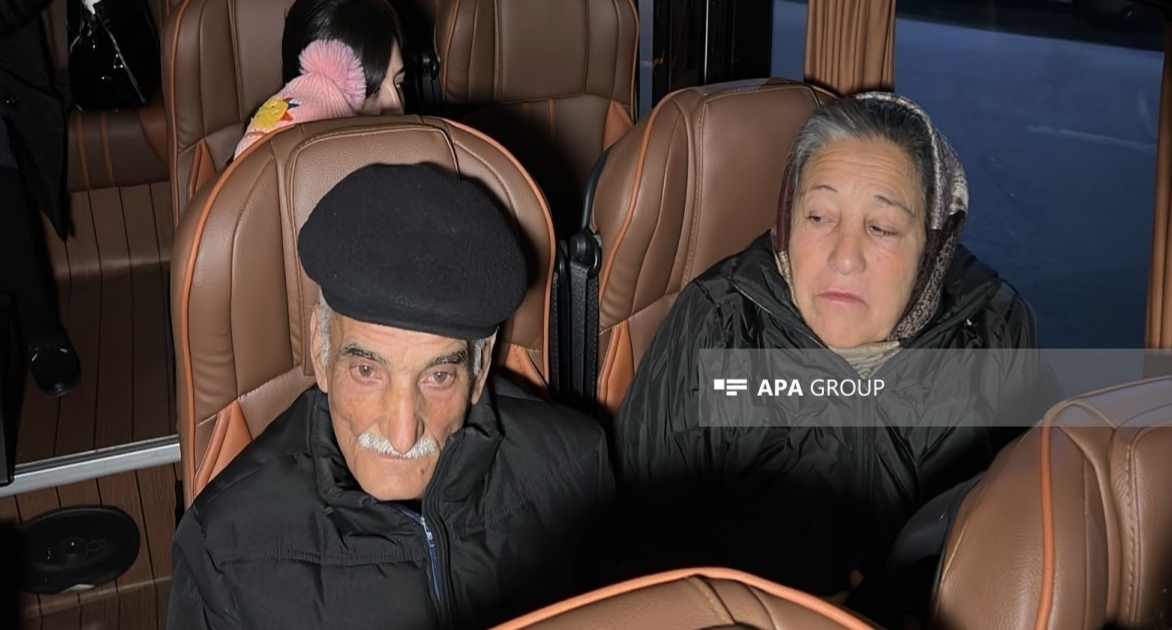
In the villages of Soltanly and Jahangirbeyli, 155 former displaced persons returned today, who had left during the Karabakh conflict.
As reported by "Caucasian Knot", Azerbaijanis from the settlements of Karabakh were forced to leave their homes after the start of the first Karabakh war. The return of Azerbaijani displaced persons began after Azerbaijan took control of these territories. By March 11, 2026, 7,541 families (30,261 people) had returned to 41 settlements in the former conflict zone.
Today, another group of former displaced persons left for the village of Soltanly in the Jebrail district and the village of Jahangirbeyli in the Zangilan district, reports APA.
16 families (80 people) are returning to the village of Soltanly, and 19 families (75 people) to the village of Jahangirbeyli, the agency writes.

"I have five daughters, we have already married them all off, and now we are returning to our native village," Report quotes her words.
Displaced persons living in a dormitory of a lyceum in Baku complained about the living conditions. More than 30 families from the Zangilan and Jebrail districts were settled in the building. A photo report by Aziz Karimov titled "Dormitory for displaced persons from the conflict zone in Baku" has been published on the "Caucasian Knot".
Soltanly and Jahangirbeyli came under Baku's control six years ago
The Jebrail district (Armenian name Jebrayil - Jragan) came under Azerbaijan's control as a result of the 44-day Karabakh war in 2020. President Ilham Aliyev announced on October 21, 2020, that Azerbaijani troops had occupied the village of Jahangirbeyli. He declared the capture of 13 villages in the Jebrail district, including Soltanly, two days earlier, on October 19.
In November 2023, shortly after the end of hostilities, Azerbaijani authorities announced plans to return 34,500 families (140,000 people) to the former conflict zone by the end of 2026. Despite the construction of roads, energy facilities, and housing, the pace of resettlement is hindered by mine danger, lack of jobs, and unresolved land use issues, analysts noted in April 2026.
The villages where residents are being resettled have been cleared of mines, but dangerous zones remain outside the settlements. For example, on October 8, in the Jebrail district, a local resident was injured by an anti-personnel mine while grazing livestock. The father of the injured person came to the area where his son was wounded and also stepped on a mine. Both were hospitalized. According to Azerbaijani authorities, taking into account these two incidents, the number of mine victims after the end of the 44-day Karabakh war in 2020 reached 443 people.
Earlier, Azerbaijani residents who returned to Karabakh told the "Caucasian Knot" that they are settling in and finding work. Despite ongoing problems with employment and infrastructure, displaced persons note an improvement in living conditions.
On September 19-20, 2023, Azerbaijan conducted large-scale military operations and took control of the territory of Nagorno-Karabakh, after which a mass exodus of the Armenian population began. By October 7, 2023, 100,632 displaced persons from Nagorno-Karabakh had arrived in Armenia, and by September 2024, only 14 Armenians remained in the region. The "Caucasian Knot" has prepared a report titled "The Beginning and End of the Unrecognized Republic of Artsakh".
Translated automatically via OpenAI from https://www.kavkaz-uzel.eu/articles/428466