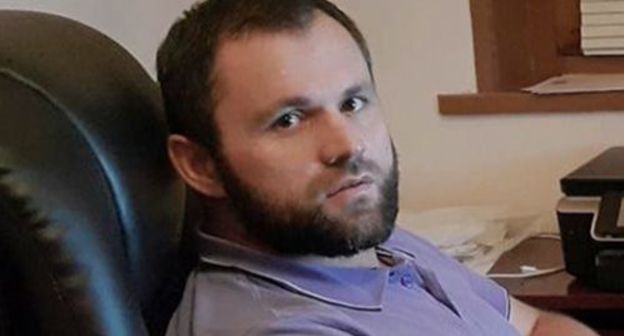


Melnychenko called the conditions of detention torturous.
The conditions of detention of Volgograd lawyer Roman Melnychenko have led to a worsening of illnesses due to the lack of quality medical assistance, delays in providing seasonal clothing, and hygiene supplies. He described the conditions as torturous and pointed out the non-compliance with national regulatory legal acts governing the proper conditions for the detention of prisoners.
As reported by "Caucasian Knot", the Central District Court of Volgograd denied the defense of the detained human rights activist Roman Melnychenko in their request to recognize his arrest as illegal and unfounded. Melnychenko reported that his health condition is deteriorating, but he has not received medical assistance in LIU-15 for a month.
In September, lawyer Dmitry Sotnikov stated that torture was applied to Roman Melnychenko in SIZO-5 in the city of Leninsk, Volgograd region. According to the lawyer, Melnychenko's chronic illnesses have worsened, and he is not receiving medical assistance.
Lawyer Dmitry Sotnikov presented written testimonies from Roman Melnychenko, in which he describes the conditions of detention in SIZO-5 and temporary detention facilities. The lawyer is particularly concerned about signs of suicidal tendencies in his client.
In a note (A copy is available to the "Caucasian Knot"), Roman reports that he was in cell No. 26 from July 22 to 27. From July 27 to the present, he has been in cell No. 9. The first cell had bunks – two beds in two levels. Cell No. 9 has one bed. In both cells, Melnychenko was alone. The areas of cells No. 26 (and No. 9 (with a toilet)) are 7 and 7.2 square meters, respectively. According to Roman, both rooms had forced ventilation. But, he said, it is "impossible" to check its operability. Both cells have a window 1.4 by 1 meter with external and internal grilles.
"The windows are very dirty and poorly permeable (to sunlight)," noted Melnychenko.
Fluorescent lamps are on 24/7.
"It is constantly bright in the cells, like during the day. It is very difficult to sleep at night due to the light in the eyes," Melnychenko complained.
In cell No. 9, the toilet is separated from the main cell by a two-meter brick partition. But it is constantly monitored by surveillance cameras.
"Privacy is not ensured. Surveillance is conducted by persons of the opposite sex. The cell constantly smells of sewage, as there are no water valves on the sink," noted Roman.
In cell No. 26, there was no shower. The cold shower was provided by the guards once a week. Melnychenko washed his underwear in the sink. Soap was given to him only on the third day of detention. In cell No. 9, the shower is located in the toilet. The water there is cold. Hot water is supplied only on Fridays. Soap was given immediately. There are basins for washing. Since underwear was not provided for a long time, after washing in the sink, Roman had to wear wet underwear.
Walks are conducted once a day for 10-15 minutes. Melnychenko kept track of time using a song, where one verse equals one minute. The walking yard is a concrete well with an area of 12 square meters. The walls are 4 meters high. The roof is a grid covered with a chain-link fence. A quarter of the roof is covered with slate sheets. There is also a surveillance camera installed there. According to Roman, he has never been taken out to walk outside.
"I consider the walking yard to be a room, as talking (with other prisoners) is prohibited, and according to paragraph 1 of the Rules (of internal order), talking is prohibited in rooms," explained Roman.
Before each return to the cell, the prisoner is searched. On the fourth day of his stay in SIZO, due to the cold in the cell, Roman Melnychenko's chronic illnesses worsened (he listed them).
"The quality of medical assistance is impossible to assess, as it has not been provided. A written request about the presence of (he named the symptoms of the disease) was ignored (as were other requests for medical examination). The medical staff is very rude. They force me to communicate with them on my knees, as the window (viewing) is at waist level, and the doctor cannot bend down and forces the prisoner to kneel to see his face... I asked her to measure the distance between my eyes (due to vision problems) to order stronger glasses. She replied that "we do not provide such services." Requests for examination by an ophthalmologist due to a sharp deterioration in vision and for a commission to establish disability were ignored by both the administration and the doctors," Roman Melnychenko reported.
On the second day of his stay in the isolation facility, Melnychenko was examined by a psychologist.
"The interview was conducted according to a template and was formal in nature. There was an insult on a national basis (from the doctor). After I made a suicidal remark in my speech, the psychologist handed me a detective book. I have not seen her since then," Roman reported.
Chronic diseases of Roman began to worsen during the first week of his stay in the cell. In cell No. 26, the window was not closed around the clock in conditions of sharply continental climate – with strong winds, intense heat during the day, and cold at night.
I hid in the toilet, where it was not so drafty, wrapping my legs for warmth with a floor rag. After three days, the diseases worsened.
"I woke up late at night from the cold. I put on everything I had: a sleeveless shirt, thin jeans, thin socks. I covered myself with a sheet (there is no blanket in the cell, and it is not provided). The SIZO administration also ignored my written request to provide me with seasonal clothing. I started doing physical exercises to warm up, but I could only manage for a short time. A strong wind blew, and the temperature dropped even further. Eventually, I hid in the toilet, where it was not so drafty, wrapping my legs for warmth with a floor rag. After three days, the diseases worsened. The administration did not respond to my written request for a medical examination," Melnychenko reported.
Melnychenko wrote a request for seasonal clothing. Only after three weeks in SIZO was he delivered a package with clothes. For a week, he was not provided with toothpaste. Later, he bought it in the prison shop. He was never given a toothbrush. Also, after a week, he was handed soap and toilet paper.
"For the first five days in SIZO, I completely lacked hygiene products... I managed to "steal" soap with the permission of the escort when I washed the paint off my hands after fingerprinting," Roman recalled.
Bedding (sheet and pillowcases) was issued immediately. It is changed once a week. The application for employment in SIZO-5 "remained unanswered."
"On the third day of detention, I was ordered by a SIZO officer to kneel and was shaved bald by another prisoner," Roman reported.
Roman spoke about the constant problem with drinking water in the cell. In the dungeon, there was a 10-liter tank for drinking water. But it was never filled completely, "and I had to drink from the tap" with technical water.
"On one hot day, I had to drink a lot of this water, and there was no way to boil it. The next day I had severe diarrhea. In cell No. 26, there was never hot water, in cell No. 9, warm water is always available, and in the shower on Fridays for 2-3 hours," Melnychenko reported.
Roman reported that he is experiencing a "strong information hunger." He has no access to the press, radio, or television. The books he received from the prison library he usually read quickly, and they were of low artistic quality.
"I submitted a written petition to provide me with educational literature. The petition was ignored. My friends tried to send me books, but they were not allowed due to censorship," Melnychenko wrote.
The attitude towards prisoners by the SIZO staff, according to Melnychenko, ranges from "professionally correct (in 85% of cases) to grossly derogatory (15%)."
"On August 18, a SIZO officer whom I had not seen before began to interrogate me. He offered me to sign a contract for the SVO, and after my refusal, citing that "I am Ukrainian," he shouted the command "run" in the presence of other (SIZO) staff," Melnychenko described the incident.
During his stay in the Central District Court of Volgograd on July 22, Melnychenko stated that he spent more than six hours in a room measuring 1 meter by 3 meters with five other prisoners. "We had to take turns sitting on the bench. The room was equipped (illegible) with ventilation, which in the intense heat and constant smoking by the prisoners led me to periodic loss of consciousness. The light in the room was so dim that I could not read documents to prepare for the court session. As a result, I was so exhausted that I could not defend myself during the court session. In court, I was placed in an iron cage like a beast. This humiliated and insulted my dignity," Roman Melnychenko writes.
According to him, transportation and transfer in an iron box measuring 0.5 square meters without ventilation and with dim light "instills an animal fear in prisoners."
In the temporary detention cell in Volgograd, there was no window, and the lighting was dim, which "did not allow for preparation for the case."
The tap on the washbasin was broken. Water dripped from it. I collected a glass of water drop by drop. To flush the toilet, I had to collect water for several hours.
"The cell was terribly dirty, and the mattress smelled so bad that it was impossible to use it. The tank for drinking water was empty. The tap on the washbasin was broken. Water dripped from it. I collected a glass of water drop by drop. To flush the toilet, I had to collect water for several hours," Roman recalled.
Melnychenko reported that the SIZO commission placed him on a professional account. No one explained the reasons for this decision to Roman. No one warned him that he could appeal this decision. Throughout his detention, Roman has been in a solitary cell. He sees people for only 1.5 minutes a day.
"I receive full (human) contact once every two weeks when communicating with my lawyer," Roman noted. At the same time, he reported an increase in apathy and "destruction of personality," and deterioration of memory. "Loneliness has begun to give rise to dreams with suicidal context," Roman confessed.
Melnychenko noted in his note the facts of non-compliance with national regulatory legal acts governing the proper conditions for the detention of prisoners. He noted that Russia has "implemented" minimum standard rules regarding the treatment of prisoners (the so-called Nelson Mandela Rules).
"My personal practice has shown that some legal norms of the Regulation (on the detention of accused and suspected persons) are not fully complied with, some norms are partially complied with, and some are complied with in form but not in content," Roman Melnychenko stated.
Thus, the rights to receive material and sanitary support and to use prison and personal libraries are partially complied with, the rights to eight hours of sleep at night are completely violated ("as the fluorescent lamp is constantly on"), as well as the right to use educational literature, and the rights of prisoners to seasonal clothing and footwear are violated. The right to a daily walk is partially complied with. The SIZO administration is obliged to provide motivated responses to prisoners' requests within 10 days. However, Melnychenko has not received a single response to his written requests.
Roman believes that he has been subjected to torture. He sees "intentionality" in the actions of the staff.
"My unjustifiably cruel detention was filmed (on video) and disseminated in the media, which indicates a direct intent for cruel treatment," Roman noted.
Recall that the responsibility for discrediting the armed forces was introduced on March 4, 2022. After that, residents of Russia, including the regions of the North Caucasus Federal District and the Southern Federal District, began to be prosecuted under the relevant article 20.3.3 of the Code of Administrative Offenses of the Russian Federation. It provides for a fine for citizens from 30,000 to 100,000 rubles, and repeated violations within a year threaten criminal prosecution.
In September 2024, Roman Melnychenko was arrested for three days on charges of disobeying police officers and fined 30,000 rubles under the article on discrediting the army.
We have updated the applications on Android and IOS! We would appreciate criticism and ideas for development both in Google Play/App Store and on the pages of the Caucasian Knot in social networks. Without installing a VPN, you can read us on Telegram (in Dagestan, Chechnya, and Ingushetia – with a VPN). Through a VPN, you can continue to read the "Caucasian Knot" on the website, as usual, and on social networks Facebook*, Instagram*, "VKontakte", "Odnoklassniki" and X. You can watch videos of the "Caucasian Knot" on YouTube.
* the activities of the Meta company (which owns Facebook, Instagram, and WhatsApp) are banned in Russia.
Translated automatically via OpenAI from https://www.kavkaz-uzel.eu/articles/427680