

Caucasus experts called kneeling apologies alien to Chechen customs.
The passenger who insulted a Chechen girl in the Moscow metro should have apologized, but the demand to kneel does not correspond to traditional Chechen reconciliation practices, noted Caucasus experts. Coercion to such apologies may lead to criminal liability, the lawyer pointed out.
As reported by "Caucasian Knot", on September 28, social media users criticized the coercion of the Moscow metro passenger to apologize on his knees after a conflict with a girl from Chechnya and demanded a response from the authorities. The conflict occurred in a metro car, where a man, appearing intoxicated, began to threaten and insult the girl after she said she was from Chechnya. Later, the Muscovite recorded the first video with apologies. The next day, he apologized again, already kneeling. The Muscovite stated that a person named Muhammad asked him to kneel. An announcement also appeared on social media offering a reward of 500,000 rubles for information about the person who insulted the Chechen girl.
The practice of public apologies, initiated by Ramzan Kadyrov, has spread beyond Chechnya to other regions of Russia. More about this practice can be read in the "Caucasian Knot" reference "The Fashion for Apologies: From Chechnya to the Outskirts". "Caucasian Knot" also maintains the "Chronicle of Public Apologies in the Caucasus".
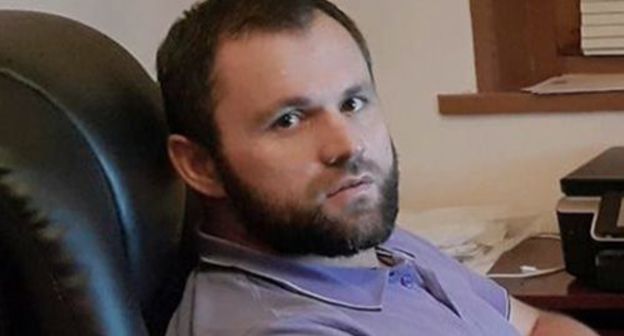
In conflicts like the one that occurred in the metro between a Moscow resident and a girl from Chechnya, the key factor is who insulted first, noted blogger Tumso Abdurakhmanov*.
"The one responding to insults bears no responsibility at all. If it is a woman, she will certainly be scolded, pointed out that she should not have insulted in response, but this will not happen publicly and she will bear no responsibility, as she is the victim if she was only responding to insults. All responsibility lies with the one who insulted first," he explained to the correspondent of "Caucasian Knot".
The initial insult by the man towards the woman set the vector of the conflict, but the subsequent behavior of the parties, from the perspective of Chechen customs, requires a comprehensive assessment, noted a Caucasus expert.
"Traditional Chechen culture unequivocally condemns public insults to women by men: to insult a woman means to harm the honor of her entire family and male lineage. If a man allowed himself rudeness towards a Chechen woman first, he committed a grave offense. If a Chechen had been in his place, according to customs, he would have had to seek reconciliation with her male relatives, sincerely apologizing for his indecent behavior," the Caucasus expert told the correspondent of "Caucasian Knot" on condition of anonymity.
He noted that in Chechen tradition, the demands for restraint and respect for elders apply to any person regardless of their nationality.
"If the girl had been the first to resort to insults against an elder, in traditional society, her family would bear full moral responsibility for the lack of restraint. The duty to resolve the dispute in such a case would lie with the older relatives on both sides, without the conflict escalating into street pressure," he noted.
The man's initial guilt does not justify the use of public humiliation unrelated to Vainakh ethics, emphasized a representative of the Chechen diaspora in Europe Milana Magomedova.
"The fact that the man insulted the Chechen woman first undoubtedly causes deep outrage among any Chechen, and the reaction to this in the form of defending her dignity is natural. The man committed an unacceptable act according to our traditions and was obliged to apologize. However, the demand to make the offender kneel has nothing to do with customs. This is exclusively a modern coercive practice of ostentatious submission. The Chechen tradition of reconciliation has never been built on artificially trampling a person into the dirt, even if he is guilty," she said in a conversation with the correspondent of "Caucasian Knot".
The man's repeated apologies were a result of serious threats, believes the chairwoman of the "Civic Assistance" Committee* Svetlana Gannushkina*.
"This second apology was apparently a result of threats from Muhammad, who called the hero of this story. Such apologies have no value. Humiliation does not contribute to the realization of guilt. This development of forms of humiliation rather indicates how Ramzan Kadyrov imagines the world before whom everyone apologizes," she told the correspondent of "Caucasian Knot".
Over the years, the practice of public apologies has led to a devaluation of the meaning of apologies, believes Gannushkina*. "This practice of humiliations has turned apologies into complete meaninglessness. It breeds resentment towards violence and even hatred," she noted.
In cases where threats or violence are proven, coercing a man to kneel and record apologies may fall under criminal articles on abuse of power or threats of murder, noted lawyer Patimat Abdulayeva.
"If it is proven that the man was forced to kneel and record apologies using threats or violence, such actions are subject to strict criminal qualification. Depending on the circumstances of the case, law enforcement agencies are obliged to consider this as abuse of power with the use of violence under part 2 of article 330 of the Criminal Code of the Russian Federation, which provides for up to five years of imprisonment, or as a threat of murder under part 2 of article 119 of the Criminal Code of the Russian Federation, if such a threat was made," she told the correspondent of "Caucasian Knot".
Publishing announcements offering a monetary reward for gathering information about a private individual may also violate the law, the lawyer noted.
"The publication on social networks of announcements offering 500,000 rubles for information about a person contains direct signs of a crime provided for by article 137 of the Criminal Code of the Russian Federation 'Violation of Privacy'. The customer of such data collection acts as an organizer or instigator of illegal obtaining of information about the personal life and residence of a citizen without their consent, for which the law provides for punishment of up to two years of imprisonment," she noted.
We have updated the applications on Android and IOS! We would appreciate criticism and ideas for development both in Google Play/App Store and on the pages of the Caucasian Knot in social networks. Without installing a VPN, you can read us on Telegram (in Dagestan, Chechnya, and Ingushetia – with a VPN). Through a VPN, you can continue to read "Caucasian Knot" on the website, as usual, and on social networks Facebook**, Instagram**, "VKontakte", "Odnoklassniki" and X. You can watch videos of the "Caucasian Knot" on YouTube.
* included in the register of foreign agents by the Ministry of Justice of Russia.
** the activities of the Meta company (owner of Facebook, Instagram, and WhatsApp) are banned in Russia.
Translated automatically via OpenAI from https://www.kavkaz-uzel.eu/articles/427069

![Tumso Abdurakhmanov. Screenshot from video posted by Abu-Saddam Shishani [LIVE] http://www.youtube.com/watch?v=mIR3s7AB0Uw](/system/uploads/article_image/image/0001/18460/main_image_Tumso.jpg "Tumso Abdurakhmanov. Screenshot from video posted by Abu-Saddam Shishani [LIVE] http://www.youtube.com/watch?v=mIR3s7AB0Uw")