

Some of the defendants appealed the verdict in the case of the "Sharia patrols" in Tyrnyauz.
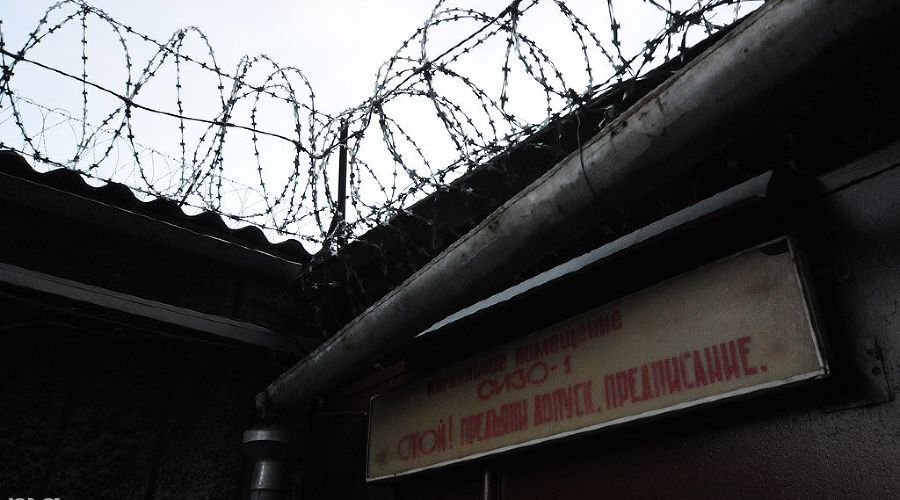
Four out of ten convicted by the Elbrus District Court in the case of the "Sharia patrols" in Tyrnyauz appealed the verdict to the Supreme Court of Kabardino-Balkaria. They consider themselves innocent and are asking for acquittal.
"Caucasian Knot" reported on the detention in July 2024 of residents of Tyrnyauz suspected of participating in the "Sharia patrols" and beating residents of Kabardino-Balkaria. For violating Sharia norms, one is supposed to answer before a Sharia court, and beating violators of behavioral norms is considered lawlessness, religious scholars indicated at that time. In June 2025, the case of ten defendants was sent to the Elbrus District Court. The alleged organizer of the community received 7.5 years in a strict regime, while the other groups received sentences ranging from 3.5 to 4.5 years in a general regime colony.
Eight defendants - Damray Baizulaev, Azamat Zhashuev, Tamaz Zvanbaya, Murman Ivechiani, Timur Kardanov, Aslan Nakhushev, Shamil Rakhayev, and Zeitun Temmoev - were accused of participating in an extremist community . In addition to this article, Nazhmudin Lieva was charged with public calls for extremism via the internet . Akhmat Chechenov was considered the organizer of the extremist community . Additionally, Chechenov was charged, like Lieva, with public calls for extremist activities.
Four defendants in the case of the "Sharia patrols" filed appeals against the verdict of the Elbrus District Court. Their defense calls the verdict illegal and unfounded, questioning its cancellation and the full acquittal of the convicted. The other six defendants in the case do not plan to file appeals, reported a correspondent of "Caucasian Knot".
According to the indictment in the case, the group began operating in 2017. Its activities were aimed at establishing order in the city of Tyrnyauz and surrounding villages that, in the view of the group members, corresponded to Sharia norms. Thus, the group leader instructed its members to seek out people whose behavior and lifestyle did not align with their beliefs about what was proper, in order to compel adherence to Sharia norms and rules. They used physical violence and psychological pressure as tools of coercion.
Group members held "Sharia courts" over those whose behavior they deemed inappropriate. The "trials" were conducted in a room for studying the Arabic language at the mosque.
Among those subjected to the "Sharia court" was a resident of Tyrnyauz, Babaev, who was sentenced to 30 strikes with a stick on the body for disagreeing with the beliefs and views of the group. After Babaev categorically objected, the punishment was softened and replaced with a reprimand. Babaev was also required to regularly attend the mosque for morning and evening prayers.
Two other local residents, Khokonov and Makoveev, were sentenced to 50 strikes with a stick for using a loan from "Sberbank," which, in the opinion of the "patrollers," contradicted Sharia norms. The sentence was carried out by group members, and Khokonov complained about their actions to the Spiritual Administration of Muslims of Kabardino-Balkaria. Upon learning of this, the group leader threatened him with another similar punishment.
The "Sharia judge" conducted divorce proceedings, considered debt and property disputes, and monitored the moral conduct of residents in the area. Women who sought the services of cosmetologists and men who consumed alcohol received reprimands from the "patrol."
The first-instance court concluded that the participants of the "Sharia patrol" committed a deliberate crime against the foundations of the constitutional order of the Russian Federation, "guided by alien to the state religious-extremist beliefs and motives, with the aim of promoting the exclusivity of the religion they profess over other religions," according to the verdict.
"Caucasian Knot" also reported that in June, the Cherek District Court of Kabardino-Balkaria sentenced the organizer of the "Sharia patrol" to four years and three months of imprisonment. The other participants of the community were sentenced to terms of two years.
In April 2022, the Urvansky Court sentenced 11 residents of the village of Anzorey to suspended sentences, finding them guilty in the case of an extremist community. According to the prosecution, the defendants, guided by Sharia norms, used force against those who did not share their views. However, lawyers and relatives of the defendants claimed that the reason for the extremism case was domestic conflicts, as stated in the material of "Caucasian Knot" "Anzorey patrols: from Sharia to extremism".
Translated automatically via OpenAI from https://www.kavkaz-uzel.eu/articles/425977
![Tumso Abdurakhmanov. Screenshot from video posted by Abu-Saddam Shishani [LIVE] http://www.youtube.com/watch?v=mIR3s7AB0Uw](/system/uploads/article_image/image/0001/18460/main_image_Tumso.jpg "Tumso Abdurakhmanov. Screenshot from video posted by Abu-Saddam Shishani [LIVE] http://www.youtube.com/watch?v=mIR3s7AB0Uw")