

The Supreme Party Court of the Communist Party of the Russian Federation upheld the expulsion of Inna Pagaeva.
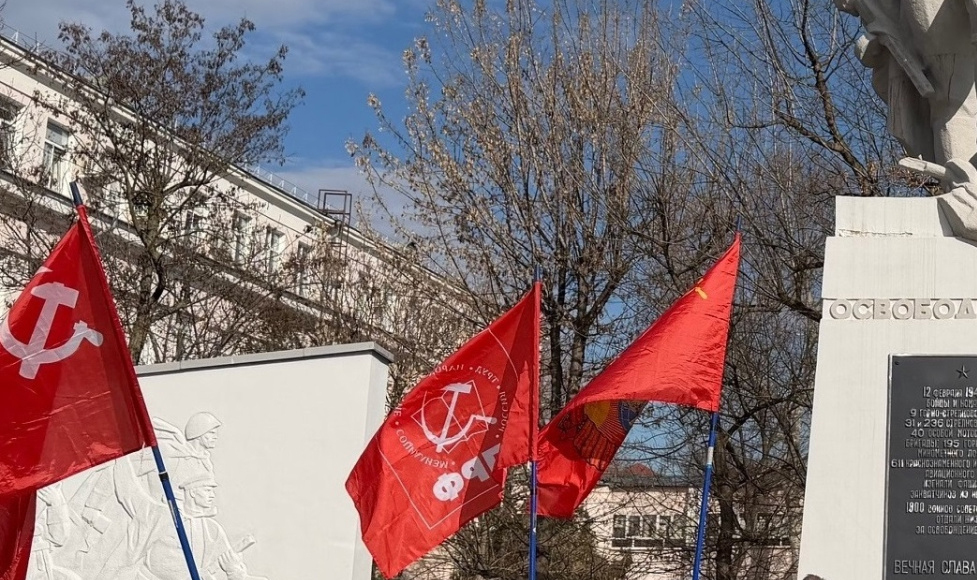
The Central Control and Auditing Commission of the Communist Party of the Russian Federation upheld the expulsion of Inna Pagayeva from the party and annulled the results of the Sochi party conference. Pagayeva herself stated that this decision confirmed the CPRF's transformation into a structure that mimics the opposition.
As reported by "Caucasian Knot," a group of Sochi communists elected Inna Pagayeva as their leader, but some of their fellow party members disagreed. The regional CPRF body declared the decision invalid, and a split occurred within the Sochi communists, effectively creating two leadership centers. The Presidium of the Control and Auditing Commission of the CPRF for Krasnodar Krai expelled Inna Pagayeva from the party. She appealed to the party leader and the Central Committee, demanding that the decision be declared illegal. A split in the Sochi branch of the Communist Party of the Russian Federation resulted in injuries and a police report.
The Central Control and Auditing Commission (CCAC) of the Communist Party of the Russian Federation is the party's oversight and auditing body. The commission ensures that all party members and party organizations (from local to central) comply with the CPRF Charter and implement the decisions of party congresses. However, the CCAC does not govern the party.
CCAC dismissed complaints from Sochi communists
On June 27, Sochi communists who complained to the Central Control and Auditing Commission (CCAC) of the Communist Party of the Russian Federation about harassment by fellow party members received a response. The response indicates that the commission dismissed the complaints regarding the cancellation of the city branch's reporting and election conference and the expulsion of former First Secretary Inna Pagaeva from the party.
Caucasian Knot has obtained four internal documents from the Presidium of the Central Control and Auditing Commission of the Communist Party of the Russian Federation (CCRC) concerning the conflict within the Sochi branch of the party. These documents include two analytical memos prepared by the commission under the leadership of commission chairman E.I. Gazeev, and two resolutions of the CCRC Presidium signed by commission chairman N.N. Ivanov.
The documents pertain to two separate intra-party disputes. The first concerns the legality of the May 26 decision of the Krasnodar Regional Committee of the Communist Party of the Russian Federation, which invalidated the Sochi City Committee's reporting and election conference held on May 16.
The second concerns Inna Pagaeva's complaints regarding the Krasnodar Regional Control and Audit Commission's decision to replace her previous severe reprimand with expulsion from the party.
In its analytical note, the commission noted that appeals from the Sochi city branch had previously been reviewed by the Central Control and Audit Commission, but that the petitioners had not received support for any of them, and the commission's previous decisions, according to the authors of the document, had not been implemented by the local party leadership.
The Central Control and Audit Commission cited the existence of a "persistently anti-party factional group" within the Sochi branch as the main cause of the conflict. According to the commission, representatives of this group violated party regulations on elections during the reporting and election conference, and their behavior was "provocative, and at times threatening and offensive," leading law enforcement to be called in to resolve the situation.
The documents also state that after the conference was declared invalid, some Sochi communists independently held an alternative meeting on May 31, where they elected their own governing bodies and first secretary. The commission deemed these bodies illegitimate and named Inna Pagayeva, Sergey Bernasovsky, Igor Volin, and Mark Markaryan among the event's organizers.
Based on these findings, the Presidium of the Central Control and Auditing Commission ruled to dismiss the appeal and uphold the Krasnodar Regional Committee's decision to annul the results of the Sochi reporting and election conference.
The Commission found Pagayeva's expulsion from the party justified.
The second block of documents is devoted to Inna Pagayeva's complaint. The materials indicate that the Sochi City Committee initially limited itself to a disciplinary sanction in the form of a severe reprimand. However, City Committee Secretary S.F. Baskakov subsequently appealed this decision, deeming the punishment disproportionate to the violations committed. After reviewing the appeal, the Krasnodar Regional Control and Audit Commission reversed its earlier decision and replaced the severe reprimand with expulsion from the party.
Reviewing Pagayeva's appeal, the Central Control and Audit Commission stated that the regional commission acted within its powers, as provided for by the CPRF charter and the regulations on the party's control and audit bodies, which allow higher-level commissions to change previously adopted disciplinary decisions.
The note also stated that, after the alternative conference, Inna Pagayeva signed documents as the first secretary of the Sochi city branch committee bureau, although, according to the commission, such a position does not exist within the CPRF structure, and Pagayeva herself did not have the appropriate authority.
The Presidium of the Central Control and Audit Commission agreed with these findings and decided to dismiss Pagayeva's complaint and leave the decision on her expulsion unchanged.
The Central Control and Audit Commission also stated that the second stage of the XIX The Communist Party of the Russian Federation (CPRF) Congress received a collective appeal signed by 52 petitioners. However, at the Congress's request, it was also forwarded to the Central Control and Auditing Commission for review and considered as part of its ongoing work.
Sochi Communists Have Exhausted Their Intra-Party Defenses
Inna Pagayeva, Sergei Bernasovsky, Igor Volin, Mark Markaryan, Igor Vasiliev, Viktor Smirnov, and other communists who signed the appeal to the party's highest body told a "Caucasian Knot" correspondent that they have no doubt that the CPRF has ceased to be an opposition party and has become a party that imitates democracy.
In their opinion, the Central Control and Auditing Commission's documents document the completion of the internal party review of two conflicts at once: the legality of the cancellation of the Sochi City Committee's reporting and election conference and the expulsion of Inna Pagayeva from the party. Sochi party activists also continue to insist that they believe the incident is the result of an internal party conflict and disagree with the conclusions of the party's central bodies.
"This response to the complaint of 52 committed left-wing Sochi communists and the expulsion of myself and other comrades from the party is, in fact, confirmation that there is no longer any opposition to the ruling party—neither in the center nor in the regions. The collapse of the Communist Party of the Russian Federation occurred slowly but methodically, not from without, but from within. After this response, all illusions have disappeared. But we have not yet decided what to do and how the Sochi communists will react to this fait accompli," Inna Pagaeva told a "Caucasian Knot" correspondent.
After the decision of the Presidium of the Central Control and Auditing Commission, the Sochi communists no longer have the opportunity to seek a review of the situation within the party, noted lawyer Elena Didenko.
"The decision of the Presidium of the Central Control and Auditing Commission marks the end of the internal party appeals process. After the Supreme Audit Authority upheld the decisions of the regional bodies, it is virtually impossible to expect a review within the party," she told a "Caucasian Knot" correspondent.
If the expelled communists intend to continue their activities, they should focus not on party bureaucracy, but on preserving their own organizational core. The law allows for the creation of public associations and initiative groups, the protection of citizens' social, environmental, and labor rights, and participation in municipal politics through the legally stipulated forms of candidate nomination and public oversight, the lawyer noted.
"Political activity does not end with the end of membership in a particular party. If activists retain the trust of Sochi residents and continue to defend their interests, they can remain visible participants in public life," Didenko said.
Translated automatically via OpenAI from https://www.kavkaz-uzel.eu/articles/424450
![Tumso Abdurakhmanov. Screenshot from video posted by Abu-Saddam Shishani [LIVE] http://www.youtube.com/watch?v=mIR3s7AB0Uw](/system/uploads/article_image/image/0001/18460/main_image_Tumso.jpg "Tumso Abdurakhmanov. Screenshot from video posted by Abu-Saddam Shishani [LIVE] http://www.youtube.com/watch?v=mIR3s7AB0Uw")