

The May 9 commemoration has called into question the preservation of the memory of the historical events of Nagorno-Karabakh.
THIS MATERIAL (INFORMATION) WAS PRODUCED AND DISTRIBUTED BY THE FOREIGN AGENT MEMO LLC, OR CONCERNING THE ACTIVITIES OF THE FOREIGN AGENT MEMO LLC.
On the occasion of May 9, Karabakh public figures and members of Armenian opposition parties visited the Yerablur military pantheon, where they laid flowers. In his address, Nikol Pashinyan mentioned only the victory in the Great Patriotic War, ignoring the historical events associated with Nagorno-Karabakh.
As "Caucasian Knot" reported, in Nagorno-Karabakh, until 2020, May 9 was celebrated as Victory Day in the Great Patriotic War, the day of the creation of the Nagorno-Karabakh Defense Army, and the liberation of the city of Shushi (Azerbaijani name - Shusha) in 1992. Last year, the President of Nagorno-Karabakh, members of the National Assembly, and representatives of public organizations visited the Yerablur military pantheon and laid flowers in memory of those killed in the wars.
On the morning of May 9, representatives of the parliament and the Public Council of Nagorno-Karabakh, as well as representatives of Armenian opposition parties, visited the Yerablur military pantheon, where they laid flowers at the Call of Artsakh Memorial and at the graves of fallen soldiers.
The statement of the Nagorno-Karabakh parliament noted that "May 9 is our memory, our victory, and our boundless love for the Motherland; this day will always remain a symbol of faith, struggle, and revival."
The statement of the Public Council The statement emphasizes that "the liberation of Shushi is one of the glorious pages in the modern history of the Armenian people." "The victory was achieved at the cost of enormous sacrifices, dedication, and unwavering devotion to the Motherland. These are values that cannot be ignored and must be preserved not only as historical memory, but also as a source of strength and resilience for the present and future. Today, when our people face grave challenges, the meaning of victories must unite, strengthen, and help us regain national consensus and faith in the future," the statement reads.
The former leaders of the unrecognized Nagorno-Karabakh Republic have not had de facto control over the situation in Nagorno-Karabakh since the fall of 2023. Following the mass exodus of Nagorno-Karabakh residents to Armenia, the president of the unrecognized republic signed a decree terminating its existence. Civil servants were dismissed, but senior officials continued to work in Yerevan. Catholicos of All Armenians Garegin II sent a message on the occasion of Victory and Peace Day, emphasizing the significance of May 9 and the role of the Armenian people in the fight against fascism and in the heroic battles of Artsakh. He offered a prayer for the repose of the souls of the fallen heroes and asked for the intercession of the Almighty for the security of the homeland and the unity of the people. "Today, when Artsakh (Nagorno-Karabakh) is occupied and subjected to ethnic cleansing, we are obligated to continue to consistently defend the rights of the Armenians of Artsakh, deprived of their homeland," the Catholicos emphasized.
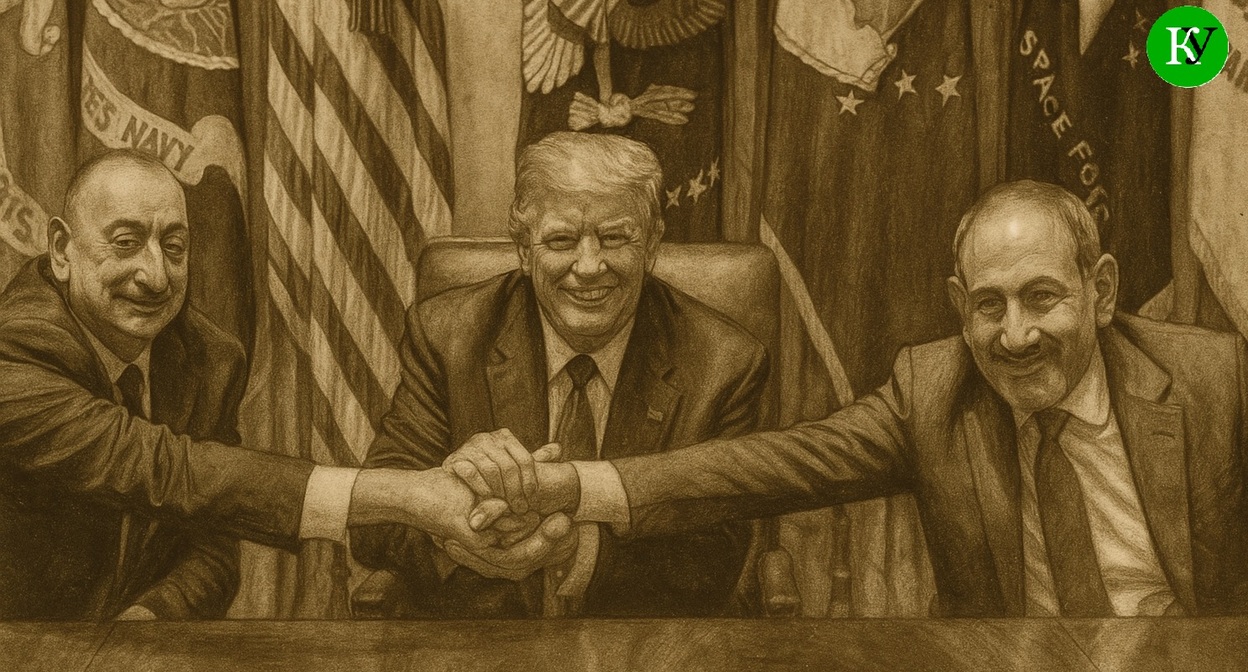
Armenian Prime Minister Nikol Pashinyan wrote on his social media page that "today is Victory Day for the Soviet Union and its Western allies in World War II, which is celebrated in our country as Victory and Peace Day," adding that "we celebrate May 9, 2026, in the conditions of peace established between Armenia and Azerbaijan." Pashinyan's address, however, makes no mention of the city of Shushi.
Residents of Armenia and refugees from Nagorno-Karabakh interviewed by a "Caucasian Knot" correspondent spoke about the significance of May 9.
"We cannot allow our history to turn into silence," said Nagorno-Karabakh parliament member Metekseh Hakobyan. "Shushi is a symbol of the victory of the Armenian people. May 9 is not only about a military victory. It is proof of the will of the Armenian people, their dignity, and their readiness to stand for the Motherland to the end. Our Homeland was liberated thanks to faith, dedication, and unity. "Today, our task is the same: the liberation of Artsakh, not to accept loss, not to get used to defeat, not to accept a criminal and Armenophobic government, and not to allow our history to turn into silence," she stated.
For every true Armenian, "May 9th remains a day of triple victories," said Avetik Chalabyan, coordinator of the "Hayakve (Armenian Voice)" civil legislative initiative. "34 years ago, on this day, the Armenian fortress city of Shushi, which was of vital strategic importance, was liberated. This was one of the most glorious victories of Armenian arms in the last century, and it will forever be inscribed in golden letters in our history. Unfortunately, the "vagrants" who came to power in our country, deprived of their homeland, squandered this glorious victory and handed Shushi to the enemy on a platter, justifying it with a false and false justification for ending the war. I am confident that one day, through our resistance, hard work, and unity, we will once again be worthy of this honor. Until then, we will forever glorify those brave Armenian fighters whose heroic deeds in 1992 saved Armenian Artsakh from the blockade and brought the joy of victory to our entire people,” Chalabyan noted.
“34 years ago, trapped in a long, brutal blockade, Armenians managed to endure hunger and pain, and then, thanks to their God-given willpower and spirit, liberate Shushi. And just 28 years later, when Armenians were free and protected both on the front lines and in the rear, Shushi was surrendered. There are no questions left about how Shushi was liberated 34 years ago. But how the ancient Armenian fortress city fell six years ago remains unclear, with more than one unknown. "I am confident that sooner or later an answer to this unclear question will also be given," said military analyst Senor Hasratyan.
"The month of May in Armenian history has been and remains a witness to our glorious victories," said Doctor of Medical Sciences, Professor Armen Charchyan.
"108 years ago, the victory in the Battle of Sardarapat left an indelible mark on our destiny. The Armenian people were effectively saved from the Turkish genocide, and the foundation for the restoration of Armenian statehood was laid. 81 years ago, in the victory over fascism, Armenians, from private soldiers to marshals, immortally inscribed their names in the unfading glory of valiant warriors. 34 years ago, the Armenian fortress city of Shushi was liberated. "The liberation of Shushi is history that cannot be erased," he said, adding that "these are glorious pages of history; we must remember them, value them, and never renounce them."
"The operation to liberate Shushi in May 1992 became one of the key pages of the first Karabakh war and a symbol of national unity and courage," said public and political figure Nairi Okhikyan.
"For many years, the liberation of Shushi was perceived as a source of particular national pride, allowing Armenians to walk with their heads held high. Today, society speaks less and less publicly about Artsakh and the events related to the liberation of Shushi. Despite the current situation, the memory of Shushi and Artsakh must be preserved, and the people must not abandon their history and national values. "Armenians will once again be able to achieve victory and maintain a spiritual connection with Artsakh," said Okhikyan.
"More than one generation of Armenians was raised on the example of victorious battles, as symbols of the struggle for freedom, faith, and the right to live on their own land," said Artur Altunyan, a native of Nagorno-Karabakh's Hadrut region.
"The liberation of Shushi was also one of these important events. It demonstrated the strength of unity and resilience of the Armenian people, who, despite difficulties and losses, always found the strength to continue the struggle and rethink their future. "The memory of such victories is important not only as a part of history, but also as a reminder of the value of unity and loyalty to one's homeland," Altunyan said.
On January 1, 2024, the unrecognized Nagorno-Karabakh Republic ceased to exist in accordance with the decree of its last president, Samvel Shahramanyan. On September 2, 2024, on the anniversary of the proclamation of the republic, Shahramanyan stated that the signing of the decree on the dissolution of Nagorno-Karabakh was forced.
We've updated our apps for Android and IOS - they now work without a VPN! We welcome your feedback and development ideas both in Google Play/App Store and on KU's social media pages. Without installing a VPN, you can read us on Telegram or use the browser CENO to bypass blocking. Using a VPN, you can continue reading "Caucasian Knot" on the website as usual, and on social networks: Facebook*, Instagram*, "VKontakte", "Odnoklassniki" and X. You can watch the "Caucasian Knot" video on YouTube. Send messages on WhatsApp* to +49 157 72317856, on Telegram to the same number, or write to @Caucasian_Knot.
* Meta (owner of Facebook, Instagram, and WhatsApp) is banned in Russia.
Translated automatically via OpenAI from https://www.kavkaz-uzel.eu/articles/423120

![Tumso Abdurakhmanov. Screenshot from video posted by Abu-Saddam Shishani [LIVE] http://www.youtube.com/watch?v=mIR3s7AB0Uw](/system/uploads/article_image/image/0001/18460/main_image_Tumso.jpg "Tumso Abdurakhmanov. Screenshot from video posted by Abu-Saddam Shishani [LIVE] http://www.youtube.com/watch?v=mIR3s7AB0Uw")