

The number of fighters from southern Russia killed in Ukraine has reached 9,050.
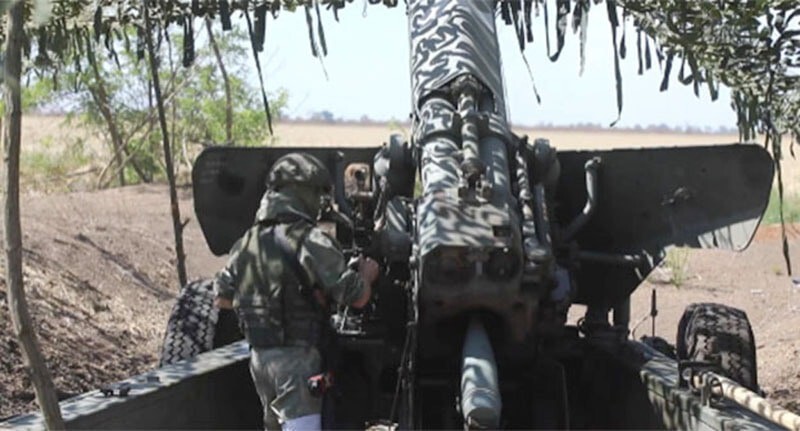
At least 4,460 fighters from the North Caucasus Federal District and 4,590 from the Southern Federal District have been officially recognized as killed in the military operation in Ukraine.
As reported by the "Caucasian Knot," by April 13, at least 9,000 fighters from southern Russia (4,435 from the North Caucasus Federal District and 4,565 from the Southern Federal District) were officially recognized as killed in the military operation in Ukraine.
The "Caucasian Knot" maintains a list of names of natives of the North Caucasus Federal District and the Southern Federal District killed in the military operation. The list was compiled within the framework of current laws and based on data provided by officials—from the governor to the head of a village, as well as representatives of security agencies.
According to the "Caucasian Knot," by April 26, government and security officials had officially recognized at least 9,050 fighters from southern Russia as killed in the military operation: 4,460 from the North Caucasus Federal District and 4,590 from the Southern Federal District.
Dagestan continues to bear the brunt of the death toll—1,904. The deaths of 939 fighters from Stavropol Krai, 582 from North Ossetia, 387 from Kabardino-Balkaria, and 263 from Chechnya have also been confirmed. id="#wk_ft2" contenteditable="false"> , 194 from Karachay-Cherkessia and 191 from Ingushetia.
Among the regions of the Southern Federal District, the Volgograd Region has the highest number of killed (1,766). Also recognized as killed were 886 fighters from the Rostov Region, 842 from the Krasnodar Krai, 734 from the Astrakhan Region, 225 from Kalmykia, and 137 from Adygea.
It should be noted that the actual losses among combatants from the North Caucasus may be significantly higher than officially acknowledged. This situation is typical for all regions of the North Caucasus Federal District, but is especially acute in Chechnya. Ramzan Kadyrov in February 2023 called on regional leaders not to disclose the number of those killed. "I don't understand when regional leaders trumpet the number of those killed in the SVO. My question is: why? There's no need to manipulate the topic of our heroes, writing that this many died in this region, and that many in another," he said.

On September 21, 2022, Vladimir Putin announced a "partial mobilization." On October 28 of that year, the Minister of Defense reported to the President on its completion, but no corresponding decree followed. After the announcement of mobilization, attempts were recorded in regions of southern Russia to mobilize people who, due to age or health, should not be sent to the combat zone.
As a reminder, the first official to report the death of a Russian soldier in the SVO zone was the head of Dagestan Sergey Melikov. On February 26, 2022, he announced that officer Nurmagomed Gadzimagomedov had been killed in Ukraine.
State awards, memorial plaques, and appearances on Channel One do not guarantee state support for the families of the slain, according to the "Caucasian Knot" article "Three Comrades Served: How the Authorities Are Depriving the Families of Slain Volunteers of Benefits," which describes the stories of slain soldiers, including those from the Krasnodar Territory.
Translated automatically via OpenAI from https://www.kavkaz-uzel.eu/articles/422759
![Tumso Abdurakhmanov. Screenshot from video posted by Abu-Saddam Shishani [LIVE] http://www.youtube.com/watch?v=mIR3s7AB0Uw](/system/uploads/article_image/image/0001/18460/main_image_Tumso.jpg "Tumso Abdurakhmanov. Screenshot from video posted by Abu-Saddam Shishani [LIVE] http://www.youtube.com/watch?v=mIR3s7AB0Uw")