

Maria Smelaya's case highlights mothers' vulnerability in custody disputes.
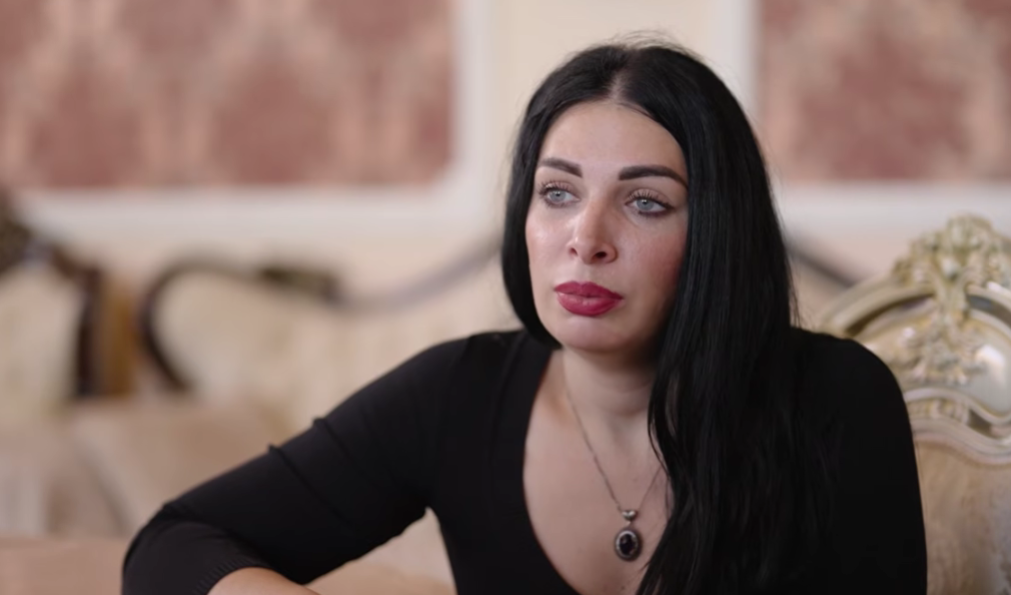
Krasnodar resident Maria Smelaya has seen her son only once since reaching a settlement with the child's father. The visit took place in the presence of her ex-husband. There are no agreements yet on where to meet again, she said. Courts fail to respond to violations by fathers, and fulfilling the court's requests for interim measures could have led to a different outcome, human rights activists believe.
As reported by the "Caucasian Knot," on April 13, Krasnodar resident Maria Smelaya agreed to leave custody with the boy's father and was granted the right to see the child for a few hours every two weeks. According to her, the decision was forced—after two years of separation, her son has become attached to his father and doesn't recognize her, and protracted court proceedings are very difficult and expensive. A year earlier, on April 25, 2025, the Prikubansky District Court of Krasnodar issued interim measures in Maria Smelaya's lawsuit and ordered the immediate return of her child, who is presumably in Chechnya. Smelaya had previously visited the address in Chechnya where her son is registered, but the house was empty. Smelaya's son, whom the court ordered returned to his mother, is, according to her, not with his father, but with an unrelated woman.
In May 2024, 33-year-old Maria Smelaya was placed in a shelter for women victims of domestic violence. She appealed to human rights activists to protect her from her husband. The violence, she claims, began shortly after their trip to visit her husband's relatives in Grozny and their marriage. Maria's story is one of many in the North Caucasus where mothers struggle for years to at least see their children, according to a report from the "Caucasian Knot" "Maria Smelaya is one of the mothers who was separated from her children in the Caucasus".
Smelaya explained her decision to drop the custody battle
Maria Smelaya stated that she entered into a settlement agreement because she was tired of fighting and believed it was best for herself and her child.
"They took the child away, basically, when he was a year old. Now he's grown up, he's three and a half. And my lawyer arranged for my ex-husband to at least bring him there and show him around. Because I was completely exhausted. So, he brought the child at a certain time. I drove over and met him. The child is well-groomed, plump, but he doesn't see any maternal affection. I hug him and kiss him, but he runs away from me. My son asks me, 'Auntie, what's your name?' If he treats me coldly, he calls him (his father) 'daddy,' or 'my daddy,'" She told a "Caucasian Knot" correspondent.
According to her, her ex-husband also began telling her that he spends 150,000 rubles a month on their child, including "a house in Chechnya," and she can't afford such expenses. "In the end, she agreed to a settlement," she stated.
The woman doesn't yet know when she will see her son again and is generally skeptical about the outcome of such visits.
"We met in Krasnodar. Then my ex-husband took him away to an unknown location. It's unclear where the child lives. He sometimes lives with one wife, sometimes with the other," she said.
She said she doesn't know when she will next see her son. "These meetings take place in his presence. I can't take my son for a walk myself," she said.
According to her, during the meeting, her ex-husband insulted her in front of their child. "I'm even losing the desire to meet. I won't sue him again, even if the terms of visitation with my son aren't met," said Maria Smelaya.
She reported that the criminal case for theft has been closed.

"Of course, the case was dropped. "There are no grounds whatsoever," Smelaya added.
She said there's no hate now, aside from insults from her husband. She still has an Instagram* account.
"After the interview with Sobchak was published, even well-known lawyers started writing and offering help. But the interview was published a whole year late. Where were they before? I've already reached a settlement agreement and don't want to deal with any more litigation." "Moreover, I'm already married and building a new family relationship with a good man," Smelaya explained.
Human rights activists considered Smelaya's case an example of the system at work

Saida Sirazhudinova, President of the Center for the Study of Global Contemporary Issues and Regional Problems "Caucasus. World. Development," believes that Maria Smelaya's refusal to continue the struggle is not a refusal, but an attempt to adapt to the conditions.
"This is the only way to get permission to see her own child, who began to forget her. This was a great blow for the mother. This case only speaks of the mother's vulnerability," she noted.
According to the researcher, cases of violence against women were ignored for unknown reasons.
"Cases of systematic violence. They did not take into account that a minor child, by law, must have a mother. This is explained by biological, social, and religious reasons. But a mother who could provide for the child, who loved him, who is not a criminal, to whom the criterion of "immorality" does not apply, loses "Access to the child. It's scary and cruel," Sirazhudinova believes.
In her opinion, the cases of Smela and Tseretiliova share some common features.
"The common feature is that the courts don't respond to violations by fathers. Both cases received media coverage. What's different is the outcome. Perhaps a change in the conditions, as the situation has become noticeably more complicated since Nina's case," Sirazhudinova noted.
Nina Tseretiliova's story became public in November 2020, when the documentary "Those Who Removed the Hijab" (also known as "Believe. Pray. Endure. Muslim Women"), about Muslim women from Dagestan, was released. In it, the woman recounted how a judge ordered her children to remain with their father, deeming her behavior and appearance, particularly her piercings and tattoos, "immoral." Nina suffered abuse during her marriage. In March 2021, the court granted Tseretilova's claim for custody of the children, and on July 16, it restricted the parental rights of the children's father, with whom the mother is divorced. In October of that year, the children were handed over to their mother. After refusing to live with their mother, the children were placed in a rehabilitation center, and their father's relatives sought custody. In June 2023, the relatives claimed that the Kaliningrad court was taking an unreasonably long time to consider the claim to restrict Nina's parental rights, preventing the children from moving to the republic to join their father's family. The children lived in a shelter during the trial. In the spring of 2024, a Kaliningrad court upheld the decision to restrict Nina Tseretilova's parental rights, but after this decision, she herself offered to return the children to her husband's relatives in Dagestan, the children's grandfather reported.
Marem movement coordinator Katerina Neroznikova believes that Maria Smelaya's case is not unique.
"Overall, this case points to a systemic nature. It shows that the power of women and men in the matter of returning their children after divorce is greatly unequal. And the fact that Maria herself, as she said, is very tired, and only someone who has been through this will understand this, is true. Not everyone has the moral strength for this fight. It is very, very difficult, terribly exhausting. "And this happens, unfortunately, regularly," she told a "Caucasian Knot" correspondent.
According to her, the outcome of the case cannot be explained by the fact that Smelaya's child lives in Chechnya.
"Well, the father is Chechen, you should have thought about that earlier—that's what people say, who, in fact, have no connection to either the Caucasus or Chechnya. But they, too, should have known that courts exist there, and that a child's place of residence must be determined, and that harboring a child is prohibited." "And Maria herself, although not Chechen, nevertheless found herself in the middle of a situation where you're under pressure, as they say, from both your own and theirs," Neroznikova explained.
She believes that Maria's situation was complicated by the failure to take interim measures to return her child.
"Yes, that's also important. A court decision alone isn't enough. It also needs to be enforceable. Smelaya and Nina Tseretilova had the same problem from the start. The latter spent years trying to enforce the decision on determining the children's place of residence. Her ex-husband took the children everywhere, including to Chechnya. Incidentally, Chechnya didn't take his side. But ultimately, the children and Nina were thrown around," Neroznikova noted.
She nevertheless pointed out the differences between the cases of Smelaya and Tseretilova.
"The most important difference, of course, is that Nina Tseretilova's children were already adults. And adult children, especially the eldest son, had their own views. He was in that formative years of adolescence, when he needed unshakable authority figures, absolute confidence, a kind of 100% pride in his parents, so he could say: 'My dad is like this, and my mom is like that.' But Nina was seen by many as some kind of problem woman. This, of course, unfortunately, didn't help her relationship with her children. But time will pass. I think the children will grow older and understand for themselves how difficult this whole struggle was for a mother," Neroznikova concluded.
Translated automatically via OpenAI from https://www.kavkaz-uzel.eu/articles/422734

![Tumso Abdurakhmanov. Screenshot from video posted by Abu-Saddam Shishani [LIVE] http://www.youtube.com/watch?v=mIR3s7AB0Uw](/system/uploads/article_image/image/0001/18460/main_image_Tumso.jpg "Tumso Abdurakhmanov. Screenshot from video posted by Abu-Saddam Shishani [LIVE] http://www.youtube.com/watch?v=mIR3s7AB0Uw")