

A terrorism case against a teenager from Dagestan has raised doubts about the security forces' version of events.
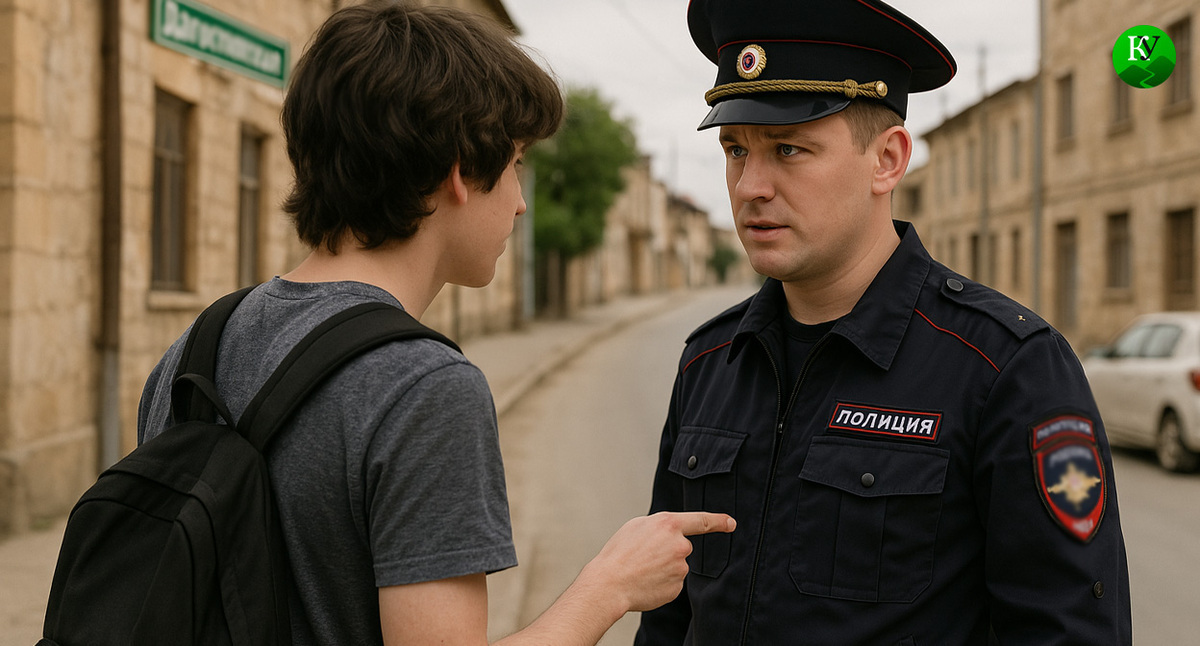
The relatives of a schoolboy from the village of Khuchni do not believe he could have been involved in planning a terrorist attack. The young man has remained in pretrial detention since October and is preparing for his final exams. Fellow villagers are providing support to the boy's family.
"Caucasian Knot" reported that an 11th-grade student in the Dagestani village of Khuchni was arrested on suspicion of participating in a terrorist organization. The student's relatives believe he was the victim of a provocation. The investigation's version of events is questionable and requires objective confirmation, analysts agreed. "The increasing number of cases of prosecution of teenagers under terrorism charges, including in Dagestan, are, in my opinion, part of the anti-people, criminally ordered policies of Russia's enemies who have infiltrated Russia's state authorities," said Interior Ministry Colonel and legal scholar Amir Kolov.
Relatives of a Dagestani teenager suspect evidence fabrication.
A teenager from the village of Khuchni, suspected of participating in a terrorist organization, remains in custody as of February 28, 2026. He celebrated his 17th birthday in Makhachkala's Pretrial Detention Center No. 1, the teenager's older sister, Leila (name changed), told a Caucasian Knot correspondent.
According to investigators, the teenager communicated via TikTok with an Islamic State* member, on whose orders he planned an attack on security forces. The defense noted that the teenager has a positive character reference.
"He didn't do anything. He was set up. I don't know who or why. And everyone who knows him thinks so too. But I can't tell you anything else," the teenager's father told a Caucasian Knot correspondent.
The teenager's older sister said that three days before his arrest, she left Khuchni for the city to study. "That day, my mother and I were on the phone from early morning. According to his mother, she didn't notice anything strange about him. In the morning, they talked about school, lessons, and the parent-teacher meeting that was supposed to take place that day. He and his younger brother discussed something over breakfast, and the young man, as usual, got ready and went to school."
According to his sister, he was a good student at school, and his brother's favorite subjects were math and chemistry. "By the way, he continues his education in the pretrial detention center and is even preparing for the state final exam," the older sister shares. [This is a form of assessment for schoolchildren who cannot take the OGE or USE due to health or other circumstances; universities do not accept the results of the GVE; the results cannot be accepted by the university — Ed. note from "Caucasian Knot"].
I don't think my brother could have committed a terrorist attack. He values even animal life, and human life even more so.
The girl is sure that her brother was "set up." "I believe my brother could not have committed a terrorist attack. He values even the lives of animals, and even more so human lives. Our parents taught us from childhood that the most important moral quality that any person should possess is kindness. He lost his mother very early on. Even though he was a child, he still understands what it's like to lose the person closest to him. He could not have done something that would hurt someone. I can't say that the case is completely fabricated, but I am certain that my brother was set up. He is too naive and trusting—he simply didn't expect meanness from people, especially in such a situation," she believes.
The beating was aimed at forcing his fingerprints on the weapon.
Leyla said that on the day of his arrest, security forces beat him, citing "resistance." "In fact, In fact, a 16-year-old boy would not have been physically able to resist a group of armed officers, especially given their numerical superiority. The beating was aimed at forcibly leaving his fingerprints on the weapon. Furthermore, my brother was taken away without the presence of a legal representative, which is a gross violation of procedure," she emphasized.
The family maintains constant contact with the young man through letters and regular visits. "He is physically healthy and doesn't show his worries. Even while in pretrial detention, he tries to support his parents, assuring them that everything will be alright in the end. He once told me: "Since fate has sent me such a test, I will go through it with my head held high—regardless of the sentence, as befits a man," the girl said.
She noted that fellow villagers came to the parents to support them, express their sympathy, and wish for a speedy release." According to her, they expressed confidence that the young man could not have committed what he was accused of, "after all, he literally grew up before their eyes."
Leila said that "the whole family is going through this difficult situation, especially because the arrested student is the eldest of their sons."
"I study in another city and can't come often, but before, he was always there for my parents, supporting them in everything. He's not just a support for them—he's a support for us, his sisters, too. Even though we're older, we always felt safe with him. For the youngest, he's a true role model, and he tries to emulate him, because the eldest is a worthy son to his parents. Despite all the trials, we haven't lost faith in goodness and continue to move forward—just like he does. Every day we pray for him, believe in his strength, and prepare for the moment when he'll be by my side again. Our goal is to ensure that after his release, he'll be able to "I want him to be able to return to the life that was interrupted without hindrance. So that he has everything he needs, so that he can forget the pain and injustice he experienced and begin a new chapter—a bright and free one," she said.
"Honestly, I see this situation as an accident or a coincidence. I don't think he meant to do this. "Everyone in the village knows about this case, but they don't discuss it, because there's no point," a friend of the teenager told a "Caucasian Knot" correspondent, asking not to be named.
The human rights activist pointed out the closed nature of terrorism cases
Earlier, "Caucasian Knot" wrote about the case of another child who, according to investigators, was planning a terrorist attack in Dagestan and the Astrakhan region.
In December 2025, it became known that a court in Astrakhan sent a 13-year-old boy to a temporary detention center for juvenile offenders. After his arrest, he said he was planning a terrorist attack in Dagestan. According to the court, the child was assembling a homemade explosive device at home and had previously corresponded with a representative of the Islamic State terrorist organization, which is banned in Russia.
On December 23, 2025, the Sovetsky District Court of Astrakhan granted an administrative claim to place the child in the Juvenile Detention Center of the Ministry of Internal Affairs of Russia for the Astrakhan Region for a period of no more than 30 days.
This period has already expired. The Center declined to comment on whether the child had been released. All information about those involved in this case, including the lawyer, remains confidential. A "Caucasian Knot" correspondent was unable to contact the boy's defense team.
Lawyers and human rights activists have no information on the prevalence of cases of children under 14 accused of terrorism being held administratively liable and isolated, as terrorism-related cases are often classified and anonymized. "This makes it impossible to analyze law enforcement and judicial practice," comments Sergey Babinets, head of the Team Against Torture (listed as a foreign agent).
"The interrogation of minors must be conducted with the participation of legal representatives, a psychologist/teacher, and a defense attorney. This should eliminate the possibility of exerting pressure on the child, as well as establish the veracity of their testimony, and determine the presence of fabrication or fantasy, if any. In my experience, there have been cases where official interrogations were conducted after the detainees had been tortured and had agreed to incriminate themselves. I don't remember any similar situations with minors, but it did happen with adults. "We don't know what really happened to the boy or whether he or his family was pressured," he emphasized.
We have updated the apps on Android and IOS! We welcome criticism and development ideas both in Google Play/App Store and on our pages. KU on social media. Without installing a VPN, you can read us on Telegram (with a VPN in Dagestan, Chechnya, and Ingushetia). Using a VPN, you can continue reading the Caucasian Knot on the website as usual and on Facebook, Instagram, and Instagram, and on VKontakte, Odnoklassniki, and href="https://twitter.com/caucasianknot">X. You can watch the "Caucasian Knot" video on YouTube. Send messages on WhatsApp** to +49 157 72317856, on Telegram to the same number, or write to @Caucasian_Knot.
* a terrorist organization banned in Russia.
** Meta (owner of Facebook, Instagram, and WhatsApp) is banned in Russia.
Translated automatically via OpenAI from https://www.kavkaz-uzel.eu/articles/421203


![Tumso Abdurakhmanov. Screenshot from video posted by Abu-Saddam Shishani [LIVE] http://www.youtube.com/watch?v=mIR3s7AB0Uw](/system/uploads/article_image/image/0001/18460/main_image_Tumso.jpg "Tumso Abdurakhmanov. Screenshot from video posted by Abu-Saddam Shishani [LIVE] http://www.youtube.com/watch?v=mIR3s7AB0Uw")