

Activists debated the idea of banning development on agricultural land in North Ossetia.
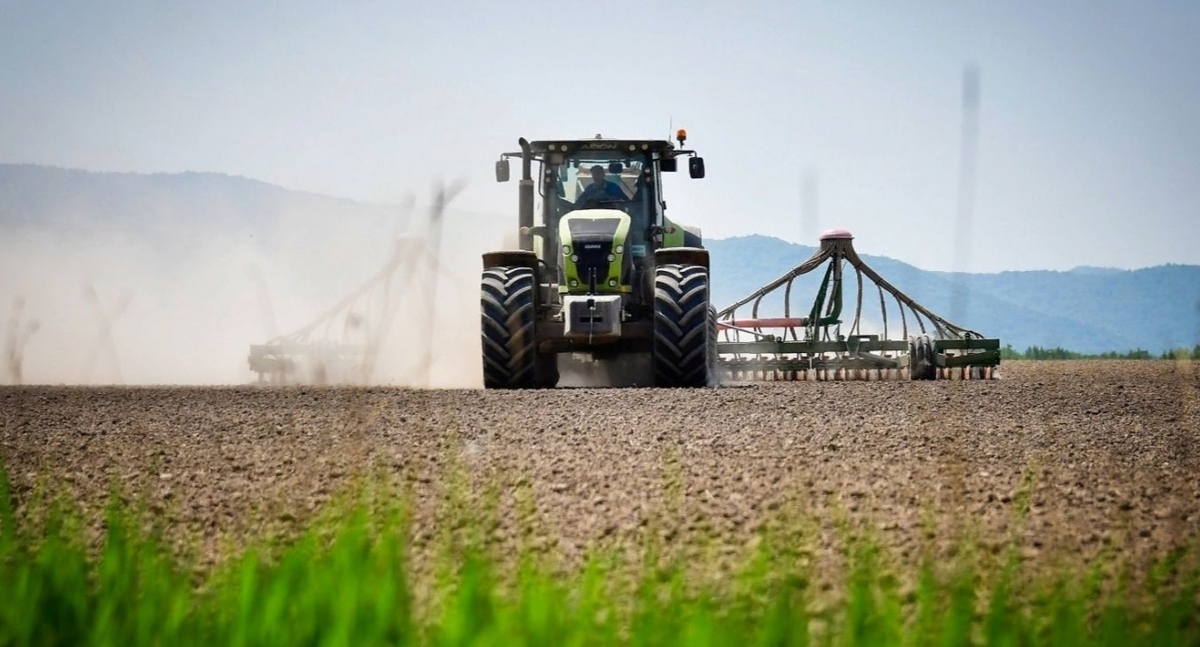
The public organization "Save the Tower" has called for a 10-year moratorium on changing the status of agricultural land in North Ossetia to prevent its development. Ossetian activists interviewed by the "Caucasian Knot" offered varying assessments of the moratorium idea.
As "Caucasian Knot reported, in September, residents of the village of Nogir asked Putin to protect arable land where, according to them, the "Simd Valley" project is planned to be built. "The head of the republic heard us and decided that "Simd Valley" will be built on the lands of the village of Gizel. But local officials ignored the head of the republic's decision... They simply decided to build where they had planned. We, the residents of Nogir, are against development on agricultural land," they stated. Following this, those who addressed Putin faced pressure from security forces.
Initially, a satellite town of Vladikavkaz called "Simd Valley" was planned to be built in the village of Nogir. However, in June, the head of North Ossetia, Sergei Menyailo, announced that residents of the village of Gizel had requested that the construction of "Simd Valley" be moved to their village. Regarding Nogir, Menyailo stated that subsidized housing for SVO participants would be built on the site where "Simd Valley" was planned. However, residents of Gizel are divided regarding the construction plans. On July 2, residents of the village of Gizel, in a video message to Putin, opposed the implementation of the Simd Valley project in their village, arguing that the construction is planned on agricultural land.
The message to Vladimir Putin was published on December 16 on the Telegram channel of the public organization "Save the Tower."
"On behalf of the residents of rural settlements in the Republic of North Ossetia-Alania, we appeal to you to take urgent measures to preserve agricultural land and legally prohibit its conversion to other categories," the message states.
The regional public organization of social and cultural initiatives "Save the Tower" is located in Vladikavkaz. "We are engaged in issues of history, ethnography, and culture of Ossetia-Alania, and also promote the revival of the best national, spiritual, and cultural traditions," reads the description on the NGO's VKontakte page.
The authors of the appeal asked that a "draft law on a moratorium on changing the category of agricultural land for a period of 10 years" be submitted to the republic's parliament, that controls over the use of agricultural land be tightened by creating a republican registry of violations, and that the republic's Ministry of Agriculture be instructed to "submit an analysis of agricultural land losses for 2015–2025."
"Almost all settlements in the Republic of North Ossetia-Alania are at risk of losing their agricultural land. For example, in the settlement of Gizel, in June 2025, the last plot of pasture land (38 hectares) was reclassified as industrial land and given over to the construction of a warehouse [for one of the marketplaces] without a survey. Residents who don't know where to graze their livestock are forced to destroy them. A similar situation is occurring in the villages of Nart and Saniba, among other settlements. The remaining agricultural land is being auctioned off at an accelerated pace throughout the republic," the appeal states.
On December 19, a direct line with the president was held, in anticipation of which residents of southern Russia's regions appealed to Putin for help in resolving environmental, transportation, and utility problems. However, their appeals were not broadcast..
Two local activists, who asked not to publish their names, commented on the public organization's appeal and the situation with agricultural land in North Ossetia to the "Caucasian Knot."
The greatest damage will be inflicted on private household plots.
One activist believes there are no food risks as such from the reduction in agricultural land. "The overwhelming majority of the republic's land is grown for corn, which is usually used for alcohol. There is no agricultural policy in the republic. The land has been distributed among smallholders and is mercilessly and barbarically exploited. "The greatest damage will be inflicted on private farms, which already have nowhere to graze their livestock," he said.
In his opinion, the construction project, ostensibly aimed at providing apartments to SVO participants, "has no logical justification other than the developers' profits." "There are thousands of unsold apartments in Vladikavkaz. There is no need to build new ones, especially at the expense of destroying agricultural land. If they want to help SVO participants, they can buy them already-built housing," the activist stated.
He noted that he supports the idea of a moratorium on changing agricultural land categories, as a moratorium "would greatly help stop the barbaric destruction of forests and fields and their transformation into human anthills." In the republic, "the forest fund is being barbarically destroyed, converted to other permitted activities and immediately cut down," the activist explained.
Nothing has been grown there for a long time.
Another Ossetian activist also pointed out the lack of food security risks from the reduction in agricultural land. "These lands have long been in someone's hands; they were used to grow industrial corn for distilleries... But the lands we're talking about now haven't been grown there for a long time. Ossetia is a rapidly urbanizing republic, and the number of people employed in agriculture is decreasing. This trend began back in the Soviet Union. Therefore, the issue isn't that land is being alienated, but that people aren't working because it's unprofitable to work in the village," he stated.
At the same time, the activist noted that he doesn't see any environmental risks in housing construction. "Constructing new neighborhoods poses no environmental risks because these lands are simply fields that were already being developed. It's just that instead of spot-building, they finally decided to launch comprehensive construction. The agricultural lands in question were long ago expropriated in favor of the city, and their status was changed several years ago for development, specifically residential development... Therefore, I don't see any particular environmental risks there," he said.
The Republic has literally been cut up into plots
In his opinion, the main issue with the moratorium is the ownership of the plots. "The problem is that a huge amount of land is under someone's control. It's just that over many, many years, the Republic has literally been cut up into plots and [...] the land has been seized. And then it's being subleased to people who are trying to grow something there. "And only Vladikavkaz is being developed on a large scale; other cities aren't being developed much. Therefore, this moratorium won't have any significant impact. The issue here is that unused lands need to be returned to the republic's jurisdiction. That is, they're simply on someone's balance sheet, nothing is being grown on them, and because of this, many institutional projects are being held back," the activist concluded.
Translated automatically via OpenAI from https://www.kavkaz-uzel.eu/articles/419253

![Tumso Abdurakhmanov. Screenshot from video posted by Abu-Saddam Shishani [LIVE] http://www.youtube.com/watch?v=mIR3s7AB0Uw](/system/uploads/article_image/image/0001/18460/main_image_Tumso.jpg "Tumso Abdurakhmanov. Screenshot from video posted by Abu-Saddam Shishani [LIVE] http://www.youtube.com/watch?v=mIR3s7AB0Uw")