

Lawyers and human rights activists pointed out the importance of publicity in connection with the pressure on the signatories of the petition in defense of Tuptsokova.
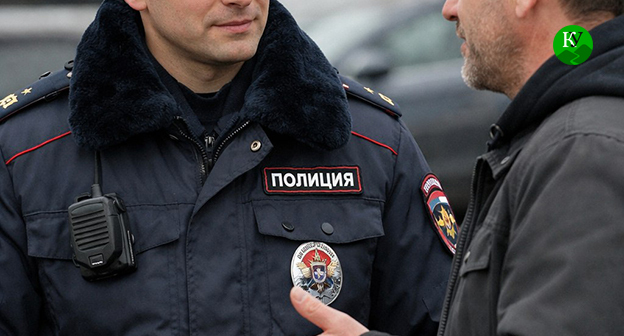
To secure an investigation into the pressure exerted on the signatories of the petition in defense of Larisa Tuptsokova, legal methods and public activism must be combined, human rights activists and lawyers have stated. At the same time, they believe informal pressure, including the dismissal of public sector employees, may continue.
As reported by the "Caucasian Knot," on November 7, the Kabardino-Balkaria Human Rights Center reported that activists from Kabardino-Balkaria who signed the petition to the head of Adygea, Murat Kumpilov, in defense of Larisa Tuptsokova, have faced pressure. They received calls from people claiming to be from the Ministry of Internal Affairs and demanding that they appear at the police station to "give an explanation" regarding the petition. Although activists from various regions signed the petition, cases of pressure have only been reported in Kabardino-Balkaria, human rights activists noted. Security forces did not pressure the signatories of the petition in defense of Larisa Tuptsokova, the Kabardino-Balkaria prosecutor's office explained its refusal to take action. Human rights activists called this response a formality.
Larisa Tuptsokova is a journalist, philologist, and Circassian language teacher. In October, Tuptsokova reported that security forces conducted searches of her parents' home in Adygea and questioned her relatives in an extremism case. At the end of September, Tuptsokova, who lives in Georgia, learned that a criminal case had been opened against her in Russia under the extremism article. About a month earlier, a fake website of the Circassian Cultural Center in Tbilisi, recognized as extremist, appeared online, where publications were posted in the name of Larisa Tuptsokova.
Larisa Tuptsokova may be detained upon returning to Russia, according to lawyer Patimat Abdulaeva.
“Tuptsokova’s detention is possible; if a case is opened, they can detain her. It’s quite possible that they can detain her. "That's what they did with the 'citizens of the USSR'*. A similar case was brought against them. It was an absolutely absurd case, but people were detained and held until they admitted their guilt," she told a "Caucasian Knot" correspondent.
People who consider themselves citizens of the USSR are an informal community; they unite in various organizations, human rights activist Alexander Verkhovsky previously told "Caucasian Knot." "These are different people who believe that the USSR continues to legally exist, while the Russian Federation, on the contrary, does not. They unite in different organizations. "From time to time, these organizations even split into parts," he explained. According to the human rights activist, several organizations of those who consider themselves citizens of the USSR have already been banned in Russia, but they don't always include the abbreviation "USSR."
"Admission of guilt has become the queen of evidence. Those who did not admit guilt were taken into custody. And people, under threat of detention, immediately signed everything they were told. If a fake website was indeed created, then it was done for statistical purposes. They have to report. Entire structures were created to combat extremism and terrorism, so they need to keep track of things. So they find loopholes. "I'm sure this fake website was created to initiate a case," the lawyer said.
As for attempts by law enforcement to pressure activists who signed the petition in support of Tuptsokova, there's no need to worry about that, she said.
"If the petition states that the website where publications in Tuptsokova's name are posted is fake, then the activists can be summoned to provide an explanation specifically on this topic. When we had a collective petition in support of one blogger, many of the signatories were also invited, and they were very worried and anxious. I explained to them, there's nothing wrong with that, go ahead and give an explanation. There's nothing scary about that. The signatories are not at risk; they cannot be held accountable for this petition." "The security forces simply want to ensure that they stop supporting her," she noted.
About 30 human rights defenders and activists from Adygea, Kabardino-Balkaria, Karachay-Cherkessia, and the Krasnodar Territory demanded that the criminal prosecution of Tuptsokova be dropped due to the lack of evidence of a crime. The signatories of the petition noted her contribution to preserving her native language and pointed out that the case against her could become a precedent for the prosecution of other people who have ever collaborated with the cultural center in Tbilisi.
Lawyer Timur Filippov questioned the possibility of a fair investigation of the case in a Russian court.
According to him, the prosecutor's office's refusal to take action in response to pressure from security forces can be appealed.
"The formal refusal of the Kabardino-Balkaria prosecutor's office can be appealed to the prosecutor's office of the North Caucasus Federal District or the Prosecutor General's Office of the Russian Federation within 10 days of receiving the response. To document the pressure, it is necessary to record telephone conversations, record the numbers of callers, request official subpoenas from the police through a lawyer, and collect witness statements from other signatories," he advised.
There is a real risk of informal pressure: summonses for "preventive" "talks," threats of dismissal for public sector employees. The real risk is not so much criminal prosecution as administrative pressure and the creation of an atmosphere of fear.
In his opinion, it is impossible to hold the signatories accountable.
"The risk of informal pressure is more real: summonses to 'preventive talks', threats of dismissal for public sector employees. The real risk is not so much criminal prosecution as administrative pressure and the creation of an atmosphere of fear to prevent further support," he noted.
The head of the Civic Assistance Committee*, Svetlana Gannushkina* believes that under the current conditions, it is possible to overcome the formalism of supervisory authorities and force the prosecutor's office to genuinely examine the facts of pressure.
"Proceed non-stop. And you can't be sure it will help. Unfortunately, there's no other way. Also, involve the press, with the same doubt about success. Keep trying and don't give up. "That's all that's possible at the moment," she told a Caucasian Knot correspondent.
According to her, under current conditions, there are no more effective or safer methods for activists themselves.
"There are no safe methods these days. But all forms of public pressure, including publications, open letters, appeals to human rights ombudsmen and international organizations—all of this must be done if you've decided to fight. In such cases, our organization personally tries not to limit itself to legal assistance and actively conducts a public campaign. Yes, this has its risks, but we strive to do both," she pointed out.
Human rights activists have taken on the role of a driving force in this matter. And they are the ones who are under attack first and foremost.
An activist from Kabardino-Balkaria, who wished to remain anonymous, believes that there is no point in waging an overly aggressive campaign.
"We must understand that it is very dangerous and useless to clash with law enforcement agencies now. Everything must be done wisely and very calmly. The safest tactic is a combination of legal action with moderate publicity through independent media, avoiding aggressive rhetoric," he told a "Caucasian Knot" correspondent.
He is confident that local human rights organizations will bear the brunt of the attack first and foremost.
"Human rights activists have taken on the role the driving force in this matter. And they are the ones who are primarily under attack. But it is easier and simpler for security forces to put pressure not on human rights activists, but on university employees, for example. And it is clear that they will be frightened in some sense. In this regard, it will be much easier if Moscow human rights activists take up this issue, because local security forces are unlikely to be able to reach them,” he noted.
On November 19, it became known that Rosfinmonitoring added Larisa Tuptsokova to the list of terrorists and extremists.
We have updated the apps on Android and IOS! We would be grateful for criticism and ideas for development both in Google Play/App Store and on KU pages in social networks. Without installing a VPN, you can read us on Telegram (in Dagestan, Chechnya and Ingushetia - with VPN). Using a VPN, you can continue reading "Caucasian Knot" on the website as usual, and on social networks: Facebook**, Instagram**, "VKontakte", "Odnoklassniki" and X. You can watch the "Caucasian Knot" video on YouTube. Send messages on WhatsApp** to +49 157 72317856, on Telegram to the same number, or write to @Caucasian_Knot.
* The interregional public association "Union of Slavic Forces of Russia" was designated an extremist organization in August 2019 by the Komi Supreme Court. Several other organizations with the abbreviation "USSR" in their names have also been added to the list of extremist organizations.
** The activities of Meta (owner of Facebook, Instagram, and WhatsApp) are banned in Russia.
Translated automatically via OpenAI from https://www.kavkaz-uzel.eu/articles/419239
![Tumso Abdurakhmanov. Screenshot from video posted by Abu-Saddam Shishani [LIVE] http://www.youtube.com/watch?v=mIR3s7AB0Uw](/system/uploads/article_image/image/0001/18460/main_image_Tumso.jpg "Tumso Abdurakhmanov. Screenshot from video posted by Abu-Saddam Shishani [LIVE] http://www.youtube.com/watch?v=mIR3s7AB0Uw")