

Belikov received a deportation notice from Georgia.
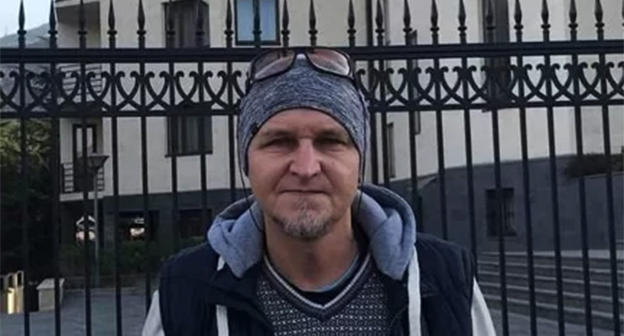
Volgograd activist Nikolai Belikov, who participated in the protests in Tbilisi, has been served with a deportation notice from Georgia with a five-year entry ban. He must leave the country by January 10.
As reported by "Caucasian Knot," on October 23, a Tbilisi court sentenced Volgograd activist Nikolai Belikov, who was detained during protests on Rustaveli Avenue, to 14 days of administrative arrest. He was released on November 5. Belikov faces deportation from the country. Belikov stated that the risks of being forced to leave Georgia after being arrested for participating in the protests are high, and there is also the possibility of persecution in Russia.
Before leaving Russia, Nikolai Belikov lived in Volgograd. He was a member of the Yabloko party and an activist in the Volgograd branch of the "For Fair Elections" movement. In 2017, he organized an "opposition walk" and participated in a rally demanding that those who ordered Nemtsov's murder be found. The activist left Russia in 2017.
Nikolay Belikovtold a "Caucasian Knot" correspondent that on December 15he was served a deportation notice with a five-year entry ban. The activist was given 30 days to voluntarily leave Georgia. If he refuses to leave the country by January 10th, he will be forcibly deported.
"If I don't leave, I will be forcibly deported. Lawyers are working on this issue. I don't know yet what they will do. I don't even want to guess. I have no status here. I don't have a residence permit.I was just about to legalize myself,and then the protests over the first "Russian law" began. They detained me. And they wanted to deport me to Russia. But I sued them, smallpox.oripped off their decision. It was two years ago,” Belikov said..
On May 14, 2024, the Georgian Parliament, amid massive and lengthy protests, adopted the bill "On Transparency of Foreign Influence." According to the ombudsman, more than 200 people were detained at the protests, more than half of whom reported improper treatment by security forces. Opposition members and their supporters call it the "Russian law," seeing it as a threat to Georgia's European path of development, according to a report from the "Caucasian Knot" "Georgia's Second Attempt to Adopt a Law on Foreign Agents. The text of the bill, taking into account the amendments made before the third reading, and an explanatory note to it, translated by the "Caucasian Knot", are posted in the "Regulatory Acts" section. The "Caucasian Knot" has also prepared a report "The Main Requirements of the Law of Georgia "On Transparency of Foreign Influence".
The activist said that he was initially planning to move to Germany. This was during the pandemic.and Nikolai was studying German, preparing for a language exam, butthe war in Ukraine started.
"I decided that I would not go anywhere, because it was ethically wrong. What would I do there? Create competition for Ukrainian refugees? I decided to stay in Georgia. And then they started passing the "Russian laws" - about foreign agents. Then I was caught for the first time I was detained and served two days in Gori. Then I was facing deportation with a two-year entry ban. I challenged the decision in court. And all these years I have been suing them. And the last time I was subjected to administrative arrest for 14 days. After the trial in Tbilisi, they took me to Poti. There (in the detention center) I sat,” Nikolai recalled. #000000;">During Belikov's latest administrative arrest, his lawyers filed a lawsuit with the ECHR, but there has been no decision yet.
Belikov's lawyers have so far declined to answer this correspondent's questions.
Protesters in Georgia have been demanding new parliamentary elections and the release of political prisoners since November 28, 2024. Security forces have violently dispersed the protests, using tear gas and water cannons, and detained protesters. Over the course of the protests, more than 1,000 people were subjected to administrative prosecution. The "Caucasian Knot" has prepared a report "Key Points on the Persecution of Protesters in Georgia".
Translated automatically via OpenAI from https://www.kavkaz-uzel.eu/articles/419228

![Tumso Abdurakhmanov. Screenshot from video posted by Abu-Saddam Shishani [LIVE] http://www.youtube.com/watch?v=mIR3s7AB0Uw](/system/uploads/article_image/image/0001/18460/main_image_Tumso.jpg "Tumso Abdurakhmanov. Screenshot from video posted by Abu-Saddam Shishani [LIVE] http://www.youtube.com/watch?v=mIR3s7AB0Uw")