

Volunteers raise questions about the fuel oil cleanup report.
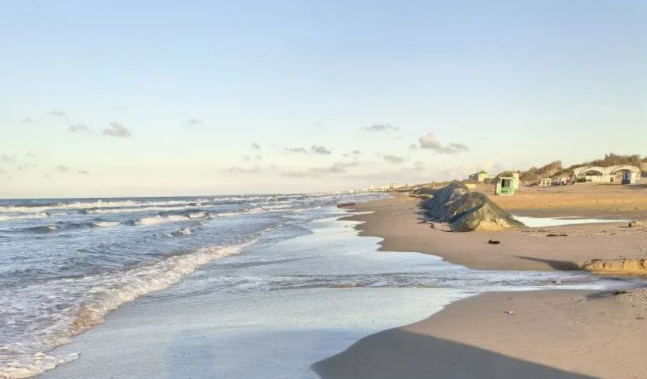
Authorities reported that more than 850 people were involved in the cleanup of the fuel oil spill, but only a few Kuban-Spas employees could be seen on the coast, volunteers indicated, inquiring about where the main forces were deployed.
As reported by the "Caucasian Knot," on November 22, authorities reported that diving inspections of the sunken fragments of the Volgoneft-212 and Volgoneft-239 tankers revealed no oil leaks. Furthermore, no new oil spills were detected on the coast of Anapa and the Temryuk district during the week, and no fuel oil spills were detected between November 22 and 27.
On October 23, Kuban authorities announced that a fuel oil slick weighing up to 900 tons was moving across the Black Sea toward the shores of Anapa and the Temryuk district. Restoration of coastal embankments and ditches has begun. Over the course of four days, from October 22 to 26, a 23-kilometer protective embankment was erected along the main beaches in Anapa. The Krasnodar Krai task force released a report on the meeting of the government commission on the cleanup of the fuel oil spill in the Black Sea on the evening of November 29. "No new cases of oil spills ashore have been recorded. According to satellite imagery, no pollution has been detected in the Black Sea," the report stated, citing the commission meeting chaired by Russian Deputy Prime Minister Vitaly Savelyev. "The combined force and resources involved in the emergency response consists of 858 people and 210 pieces of equipment. Since the start of operations, more than 185,000 tons of contaminated sand have been removed from beaches in the Krasnodar Territory and Sevastopol," the statement reads. On the ground, the picture is less clear, according to the Dolphins headquarters. "Volunteers and residents of the Temryuk district continue to see the aftermath of the initial fuel oil spills on the shore, while official forces are minimal. In some areas, they say, only a few Kuban-SPAS employees are working, compared to the declared total of hundreds," the headquarters' Telegram channel reported. Volunteers asked a number of questions. "Where are the main cleanup forces actually concentrated? How are resources distributed among problematic areas of the coast? Is there a separate plan for the additional cleanup of old contaminated sand and dunes?" - they asked. By 3:19 PM Moscow time, there were no comments on the volunteer headquarters' Telegram channel, which has 750 subscribers.
Translated automatically via OpenAI from https://www.kavkaz-uzel.eu/articles/417637


![Tumso Abdurakhmanov. Screenshot from video posted by Abu-Saddam Shishani [LIVE] http://www.youtube.com/watch?v=mIR3s7AB0Uw](/system/uploads/article_image/image/0001/18460/main_image_Tumso.jpg "Tumso Abdurakhmanov. Screenshot from video posted by Abu-Saddam Shishani [LIVE] http://www.youtube.com/watch?v=mIR3s7AB0Uw")