

The refusal to allow delegates from Yerevan to meet with prisoners in Baku sparked a debate on social media.
Representatives of the Yerevan delegation should have been more persistent after being denied a meeting with fellow countrymen arrested in Azerbaijan, Armenian Facebook users* stated. Azerbaijani users questioned whether the foreign delegation had the authority to visit prisoners.
As reported by the "Caucasian Knot," during the second meeting of representatives of Azerbaijan and Armenia, which took place in Baku, the issue of Armenian prisoners in Azerbaijan was again discussed. Despite requests, visiting the prisoners was not included in the program, and meetings with them were not possible, according to members of the Armenian delegation.
The Yerevan delegation's visit to Baku took place on November 21-22 as part of the "Bridge of Peace" initiative. During the visit, civil society representatives from Armenia met with their colleagues from Azerbaijan. A month earlier, on October 21-22, a meeting of delegations with almost the same composition took place in Yerevan. It was the first meeting of civil society representatives from Armenia and Azerbaijan in this format.
As of 12:25 Moscow time, Facebook* users had left 161 comments under the "Caucasian Knot" post about the results of the Yerevan delegation's visit to Baku.
Some of them, users with Armenian surnames, suggested that the Yerevan delegation was not persistent enough. Azerbaijani users disagreed.
They gave in too quickly
"The delegation should have insisted. They gave in too quickly," wrote Suren Hovhannisyan. "If they refused, it means the delegation was weak. They should have pressed," opined Karen Matevosyan.
"The delegation should have demanded, not begged," said Gor Hakobyan. "Demand in a foreign country? Are you serious?" responded Elchin Mammad.
"Our people are sitting there without rights. The delegation was obliged to seek access," pointed out Nane Sargsyan. "They have lawyers. Access is guaranteed by law," countered Rauf Alizade.
The meeting participants did not say which prisoners were discussed or what they were accused of. Delegation member Naira Sultanyan said she had not received a "clear and concrete answer" from the Azerbaijani side regarding the number of prisoners and their names. According to Meydan TV, 23 Armenian prisoners are being held in Baku detention centers, including those convicted of various criminal offenses. Meanwhile, trials are currently underway in Baku for former representatives of the Karabakh authorities accused of war crimes. Former State Minister Ruben Vardanyan is being tried separately from 15 former Nagorno-Karabakh leaders, according to the "Caucasian Knot" report "Vardanyan and 15 Karabakh Leaders: Key Points on the Baku Courts."
Other users debated whether the foreign delegation of public representatives had the right to seek meetings with the prisoners.
Who are they to meet with defendants?
"Who are they to meet with defendants? Only lawyers can do that," said Azat Abbas, in particular. "International organizations can visit. The Red Cross, for example," objected Arnold Grigor.
"People under investigation are not within the purview of the peacekeeping process. The delegation came to talk about peace," stated Dilyara Efendieva. "It was a provocation. The delegation has no such authority," opined Gennady Simantov.
"Are they going to ask for their release at the next meeting? Is that why they're going to Baku?" asked Arzu Karu. "Why would they meet with people we consider criminals? What's their interest in 'people under investigation'?" – wrote Samit Huseynov.
User Hayk Arakelyan stated that "the delegation was humiliated by the refusal." "Nobody humiliated anyone. They simply violated the procedure for addressing the issue," wrote Kamala Mirzaliyeva in response.
"Procedure is a pretext. They didn't want to show the conditions in which they were being held," joined the discussion Sofya Sargsyan. "The conditions are normal. And that's a fact," categorically objected Elshan Karimov. "The fact is that no one saw them," responded Tatul Gasparyan. "Because that's the law," retorted Javid Akhmedov.
The law could have been circumvented for the sake of a goodwill gesture.
"The law could have been circumvented for the sake of a goodwill gesture," pointed out Narek Aroyan. "A goodwill gesture is when they don't try to gain publicity during a 'visit,'" noted Ulvi Hasanli. "Azerbaijan is afraid the truth will be revealed, so it doesn't allow it," suggested Arman Hayrapetyan.
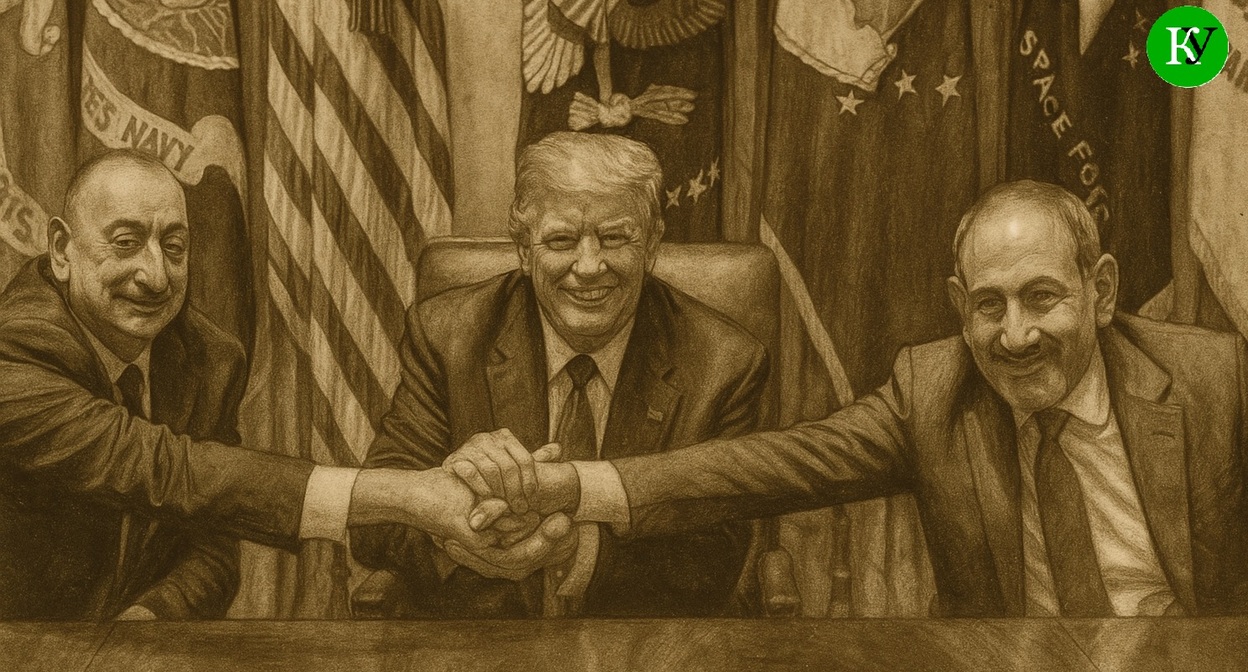
As a reminder, on August 8, Azerbaijani President Ilham Aliyev and Armenian Prime Minister Nikol Pashinyan signed a declaration on the cessation of hostilities at a meeting in Washington. Aliyev and Pashinyan did not sign the peace agreement, but only initialed it, and most of the declaration's provisions contained vague wording, analysts noted.
In October, Ilham Aliyev announced the lifting of all restrictions on cargo transit to Armenia. Armenian authorities considered this an important step in opening regional communications. Following this, Russian Railways organized the shipment of wheat to Armenia via Azerbaijan. The Armenian government noted that this fulfilled one of the agreements reached in the United States, which contributes to strengthening peace between Yerevan and Baku.
Translated automatically via OpenAI from https://www.kavkaz-uzel.eu/articles/417533



![Tumso Abdurakhmanov. Screenshot from video posted by Abu-Saddam Shishani [LIVE] http://www.youtube.com/watch?v=mIR3s7AB0Uw](/system/uploads/article_image/image/0001/18460/main_image_Tumso.jpg "Tumso Abdurakhmanov. Screenshot from video posted by Abu-Saddam Shishani [LIVE] http://www.youtube.com/watch?v=mIR3s7AB0Uw")