

The appeals of Russians convicted in Georgia have reached the court.
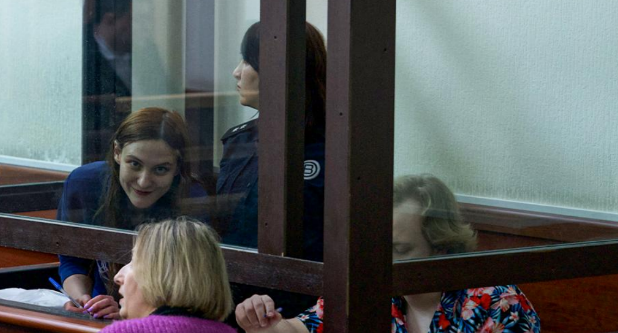
The Tbilisi Court of Appeals will hear appeals against the sentences of Russian citizens Anton Chechin, Anastasia Zinovkina, and Artem Gribul, who participated in pro-European protests and were sentenced to 8.5 years in prison on drug charges.
As reported by the "Caucasian Knot", Russian citizens Artem Gribul and Anastasia Zinovkina, who participated in protests in Tbilisi, were arrested in December 2024 on drug trafficking charges. They claim that evidence was planted against them and that security forces resorted to threats. On September 12, a Tbilisi court sentenced both to 8.5 years in prison. Anton Chechin, a protester, also received the same sentence on a similar charge. Zinovkina said that on October 29, she received no assistance from prison staff for eight hours, although she could not move due to back pain, and the doctor could only offer her "a stronger painkiller that the psychiatrist has." Zinovkina is provided with medical care in prison and does not require inpatient treatment, the Georgian Penitentiary Service stated in response to activists' demands for medical care.
"Caucasian Knot" published a report "The Main Thing About the Persecution of Protest Participants in Georgia".
Next week, two appeals court hearings will be held in the cases of Russians, political prisoners, and participants in last year's protests, whom the Georgian authorities found guilty of Drug possession.
On November 24 at 2:30 PM (1:30 PM Moscow time), the appeal hearing in the case of Anton Chechin begins.
On November 26 at 1:30 PM (12:30 PM Moscow time), the court will hear the case of Anastasia Zinovkina and Artyom Gribul, Tbilisi Life reports.
On November 3, Georgian human rights organizations held a briefing where they stated that Chechin, Zinovkina, and Gribul were victims of a politicized justice system. According to the NGOs, any objective court would have released them right there in the courtroom. The human rights activists noted that the judges relied almost exclusively on the testimony of police officers and interpreters, whose objectivity raises serious questions. The bureau that hired the interpreters had financial ties to the Ministry of Internal Affairs, and the interpreters themselves were acquainted with the police witnesses, the publication states.
Translated automatically via OpenAI from https://www.kavkaz-uzel.eu/articles/417446

![Tumso Abdurakhmanov. Screenshot from video posted by Abu-Saddam Shishani [LIVE] http://www.youtube.com/watch?v=mIR3s7AB0Uw](/system/uploads/article_image/image/0001/18460/main_image_Tumso.jpg "Tumso Abdurakhmanov. Screenshot from video posted by Abu-Saddam Shishani [LIVE] http://www.youtube.com/watch?v=mIR3s7AB0Uw")