

230 tons of sand and fuel oil were removed from the beaches in the village of Voskresensky.
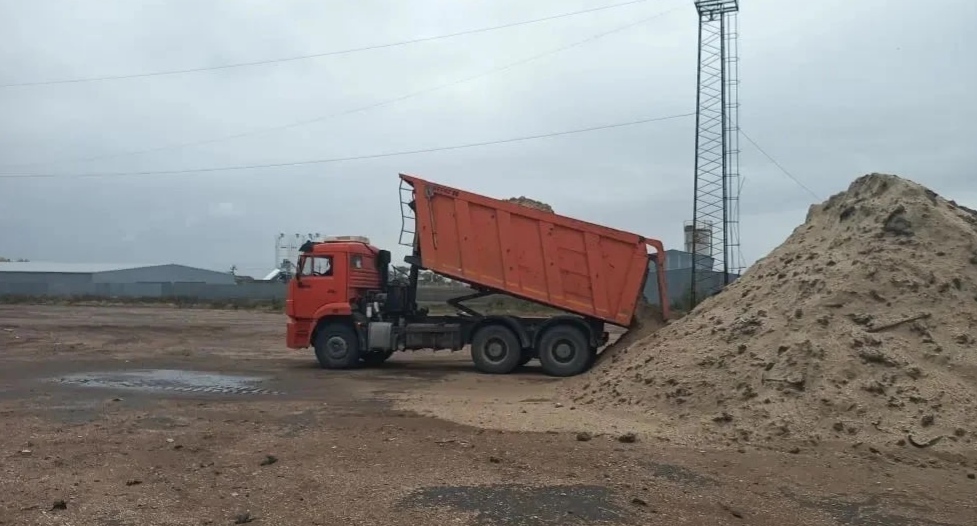
Over the course of three days, 230 tons of fuel oil-contaminated soil collected on the coastline were removed to a temporary storage site in the Voskresensky village of Anapa.
As reported by the "Caucasian Knot," on October 24, volunteers discovered fuel oil spills in Anapa and the Temryuk district. Environmental activists began cleaning up the spills, and authorities brought in local administration staff. On October 27, minor fuel oil spills were discovered near Taman.
On October 23, Kuban authorities announced that a fuel oil slick weighing up to 900 tons was moving across the Black Sea toward the shores of Anapa and the Temryuk district. Restoration of coastal embankments and ditches in front of them has begun. Over the course of four days, from October 22 to 26, a 14-kilometer protective embankment was erected along the main beaches in Anapa.

From October 25 to 27, 230 tons of fuel oil-contaminated soil were removed to a temporary storage site in the village of Voskresensky in Anapa, the Kuban task force reported on its Telegram channel.
On October 24, fuel oil emissions were found in the village of Blagoveshchenskaya near the Malakhit boarding house and the Zhara hotel, on the Bugaz Spit, between the village of Vityazevo and the village of Blagoveshchenskaya in Anapa, and near the Albatross beach in the village of Veselovka in the Temryuk District. On October 25, "small fragments of fuel oil" were found on the Bugayskaya Spit and between Vityazevo and Blagoveshchenskaya, authorities reported.
"The cleanup of these areas is complete. 230 tons of sand contaminated with oil products were removed to a temporary storage site. About 500 people were involved in the work – including employees of the Russian Ministry of Emergency Situations, representatives of municipal administrations, Kuban-SPAS employees, and volunteers," the publication states.
As a reminder, in 2024, the removal of contaminated soil to Voskresenskoye sparked protests from local residents. On December 24, they blocked the road. The industrial zone where sand and fuel oil bags are dumped is located near residential buildings, and the hazardous cargo is stored directly on the ground, residents stated. Authorities subsequently established a fuel oil storage site in Voskresenskoye.
By March 1, the most contaminated fuel oil-contaminated soil had been removed from the site. Residents of the village pointed out that the sand is stored near homes, a school, and a kindergarten, and called for expedited removal. On May 30, they demanded a meeting with the mayor of Anapa, and in a subsequent appeal, they called for the sand to be removed as quickly as possible.
Authorities promised to remove all the sand from the temporary storage site in Voskresenskoye by April 1. However, this deadline was postponed first to April 15, then to the end of May, and then to mid-July.
On July 24, authorities reported that 5,000 tons of sand remained at the site and set a removal deadline of a week and a half, emphasizing that the landfill will be used until the coastal cleanup is completed as a temporary storage site for freshly collected emissions.
Black Sea fuel oil pollution continues; satellite images showed leaks from sunken tankers in August. Most of the fuel oil settled to the seabed, including in the area of Taman, Anapa, and the Bugay Spit, scientists concluded.
On December 15, 2024, two tankers carrying fuel oil sank in the Kerch Strait. A crew member from one of the tankers died as a result. Furthermore, an oil spill occurred, leading to catastrophic environmental consequences, according to the Caucasian Knot report "Fuel Oil Spill in the Kerch Strait".
Materials on the consequences of the fuel oil spill have been collected by the Caucasian Knot on the page "Eco-disaster in Kuban".
Translated automatically via OpenAI from https://www.kavkaz-uzel.eu/articles/416720




![Tumso Abdurakhmanov. Screenshot from video posted by Abu-Saddam Shishani [LIVE] http://www.youtube.com/watch?v=mIR3s7AB0Uw](/system/uploads/article_image/image/0001/18460/main_image_Tumso.jpg "Tumso Abdurakhmanov. Screenshot from video posted by Abu-Saddam Shishani [LIVE] http://www.youtube.com/watch?v=mIR3s7AB0Uw")